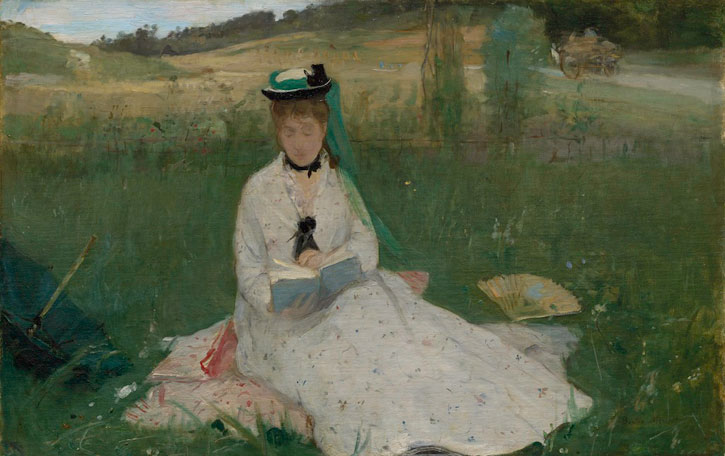
Is reading dying? On Radio 4 there’s a thoughtful series of three programmes by James Marriott that poses this question. He’s not so much worried that functional literacy is failing, though it’s certainly a problem that so many children leave school without the skills to read their way into coping with the everyday world. What bothers him is that so many people – and not just children and younger people – seem to have lost the ability to concentrate on more than very short quantities of text, and that they find words in printed form particularly challenging.

If this is true, how did the trend start? One possible culprit is the Covid pandemic. We know that Covid has had many serious and lasting effects. Contact with the virus has left many people with various ‘long Covid’ physical symptoms. Mental health problems seem to have grown worse. Settled educational and social patterns were disrupted, resulting, for example, in increased school absenteeism, still historically high. Even before Covid, the world economic crisis in 2008 and the austerity that followed made life for millions much harder and less favourable for reading opportunities. So could it be that these and other factors have had a part to play in the decline of reading?
Many more fingers are pointed at another trend, the rapid rise of the smartphone and, more generally, the limitless online world that has opened up for everyone, including children. Here the special villains are the social networking and chat sites, designed to spread addiction to scrolling. Scrolling, the critics say, encourages users to move as rapidly as possible from one brief post or video or message to the next, and discourages lingering over a longer piece of text to absorb and mull over its content. Gen Z people have never experienced the pre-online world, and are almost unaware that there are other ways of reading text than on a screen.
That a fast decline in traditional reading is happening is beyond dispute. OECD PISA surveys show a decrease in ‘literacy proficiency’ in most member countries in the last decade (Finland and Denmark are exceptions). In the US, according to the Monitoring the Future and American Time Use surveys, the percentage of students who read a book or magazine every day shrank from around 28% in 2004 to just 16% by 2023. Here, the National Literacy Trust found that just a third of young people aged between 8 and 18 read for pleasure in 2025, a 36% decrease since 2005. Large numbers of people – young and old, across class and educational backgrounds – admit that they find it increasingly difficult to concentrate.

The fast acceleration of reading decline since 2010 coincides with the age of ‘ubiquitous online’, especially through smartphones (the iPhone first arrived in 2007). The average Briton now spends around seven hours a day in front of a screen (it’s higher for the under 24s). So it’s hard to disagree with those who argue that the ‘cool’ world of long-form reading, whether in print or digital form, is being crowded out by ‘hot’ online culture – the world of X, TikTok and YouTube. Several features of this new world are hostile to ‘deep reading’. Many online services are heavily addictive, encouraging endless, passive scrolling and skimming, rewarding ‘likes’ and provoking instant disgust or hostility. Typically, their data blocks are tiny, conveying minimum information and maximum affect (the algorithms deliberately engineer extreme reactions). You don’t have to resort to neurological ‘rewiring the brain’ theories to believe that a constant diet of this stuff may have an effect on your ability to concentrate and apply your mind to absorbing and assessing complex thoughts committed to writing. Calm reflection, independence of thought and questioning of authority, rational dialogue with other minds, verbal fluency, creativity – all are threatened when the airwaves are dominated by streams of 20-second TikTok videos made by teenage ‘influencers’.
If this is true, the outlook for some forms of reading is bleak. (We can’t quite say that reading in itself is in danger, since the ‘new internet’ is, for the moment, still as full of words as it is of videos and films.) What will become of teaching literature, in an age when, it’s said, hardly any student can be expected to cope with tackling Middlemarch or Wolf Hall? What hope is there for the return of a rationally contested political culture when Trump, Orban and Farage have finally left us? Can there be any future for serious authors in a world without serious readers?

There’s another view, of course. The ‘attention span crisis’, it’s said, is just the latest moral panic. It’s simply that the democratic, universal online world is now just as varied as the real world. There’s no evidence that our cognitive intelligence is diminished. Critics of ‘screen culture’ ignore the undeniable fact that online has brought massive benefits to all, including a huge increase in the amount of knowledge freely and immediately available.
But let’s assume that we do face a crisis. What will the future for reading look like? Are we moving rapidly away from what we fondly think of as ‘universal literacy’ to a world where serious, long-form reading is confined once again, as it was in the eighteenth century, to an intellectual elite? Even though print has proved surprisingly persistent, despite claims that online would extinguish it, the traditional book may eventually become a rare and prized object, like the medieval manuscript. What began, in the halcyon early days of wired culture, as a luxuriant garden, where everyone could pluck any fruit of knowledge they pleased (and plant their own trees), has developed into a series of digital gulags controlled by absurdly rich tech-bro gaolers, intent on extracting the attention and money of their victims. In the longer term, we may enter a completely new age of orality, where memory is stored in human heads rather than on paper, where we might rediscover some of the skills that we lost when we learned the alphabet, and where we will revert to pre-literate habits of thought and behaviour.
For James Marriott, at the end of his Substack article ‘The dawn of the post-literate society’, all this makes for an apocalyptic vision:
As power, wealth and knowledge concentrate at the top of society, an angry, divided and uninformed public lacks a way understand or analyse or criticise or change what is going on. Instead, more and more people are impressed by the kinds of highly emotional charismatic and mystical appeals that were the foundation of power in the age before widespread literacy.
Just as the advent of print dealt the final death blow to the decaying world of feudalism, so the screen is destroying the world of liberal democracy.
As tech companies wipe out literacy and middle-class jobs, we may find ourselves a second feudal age. Or it may be that we are entering a political era beyond our imagining.
Whatever happens, we are already seeing the world we once knew melt away. Nothing will ever be the same again.
Welcome to the post-literate society.

Leave a Reply