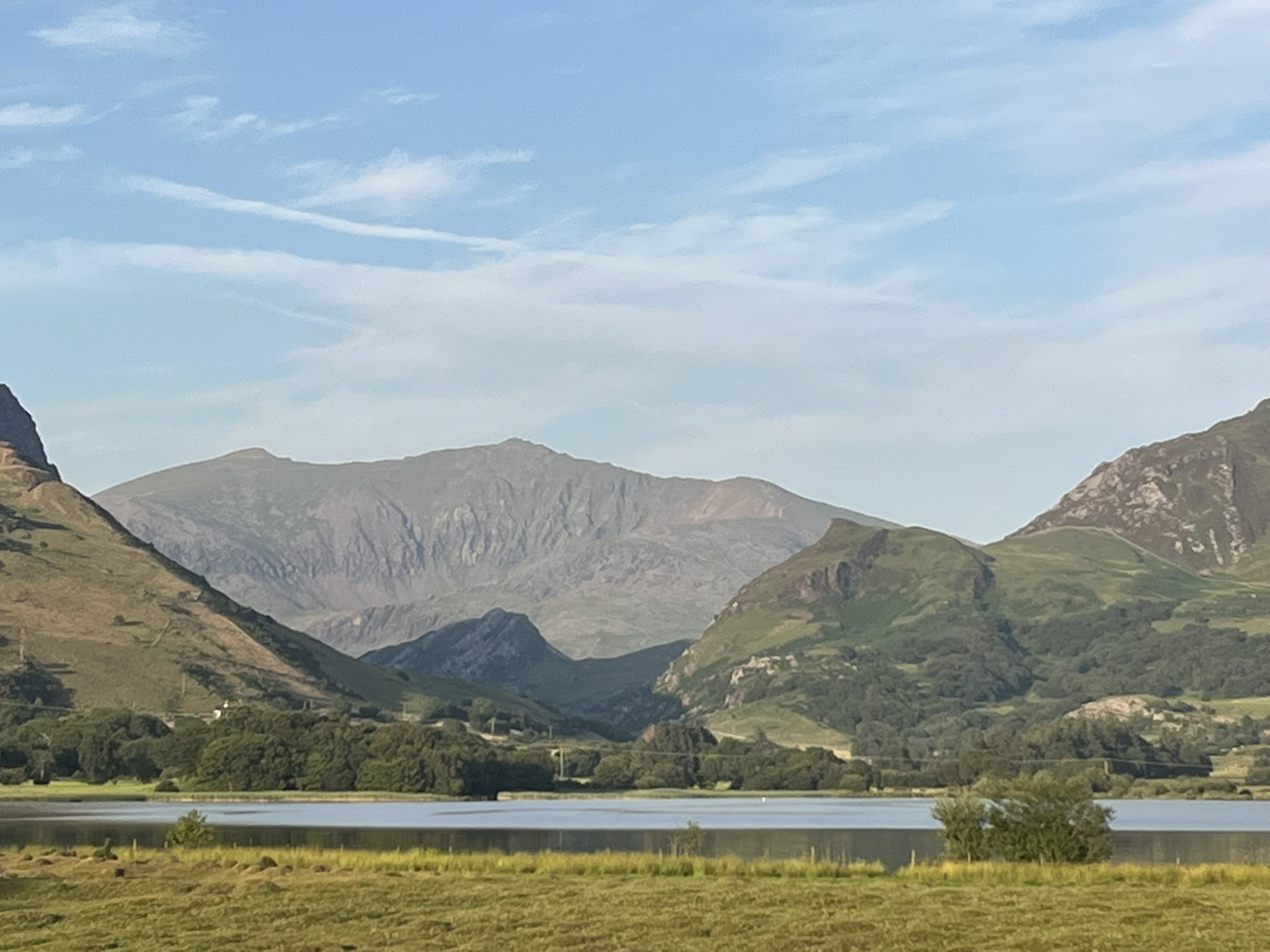
These are torrid days. On my way to the Mumbles shops this morning, on the shaded side of the road, I met an acquaintance walking with her stick and small dog. She looked down at the dog, a pug with a facial expression of one with a long prison sentence still to run. ‘He’s as old as me, poor dab’, she said, ‘and he can’t even take his coat off.’
Last weekend, to escape the hot and crowded streets of Caernarfon, I fled south to spent the night in the small village of Nantlle. The last time I was here was at the end of August last year, when the weather was different. A violent rainstorm obliterated the landscape and soaked me to the skin, despite my comprehensive rain-gear. Today the sky was cloudless, the air windless. Any body movement beyond a short stroll sent sweat coursing down neck and chest.
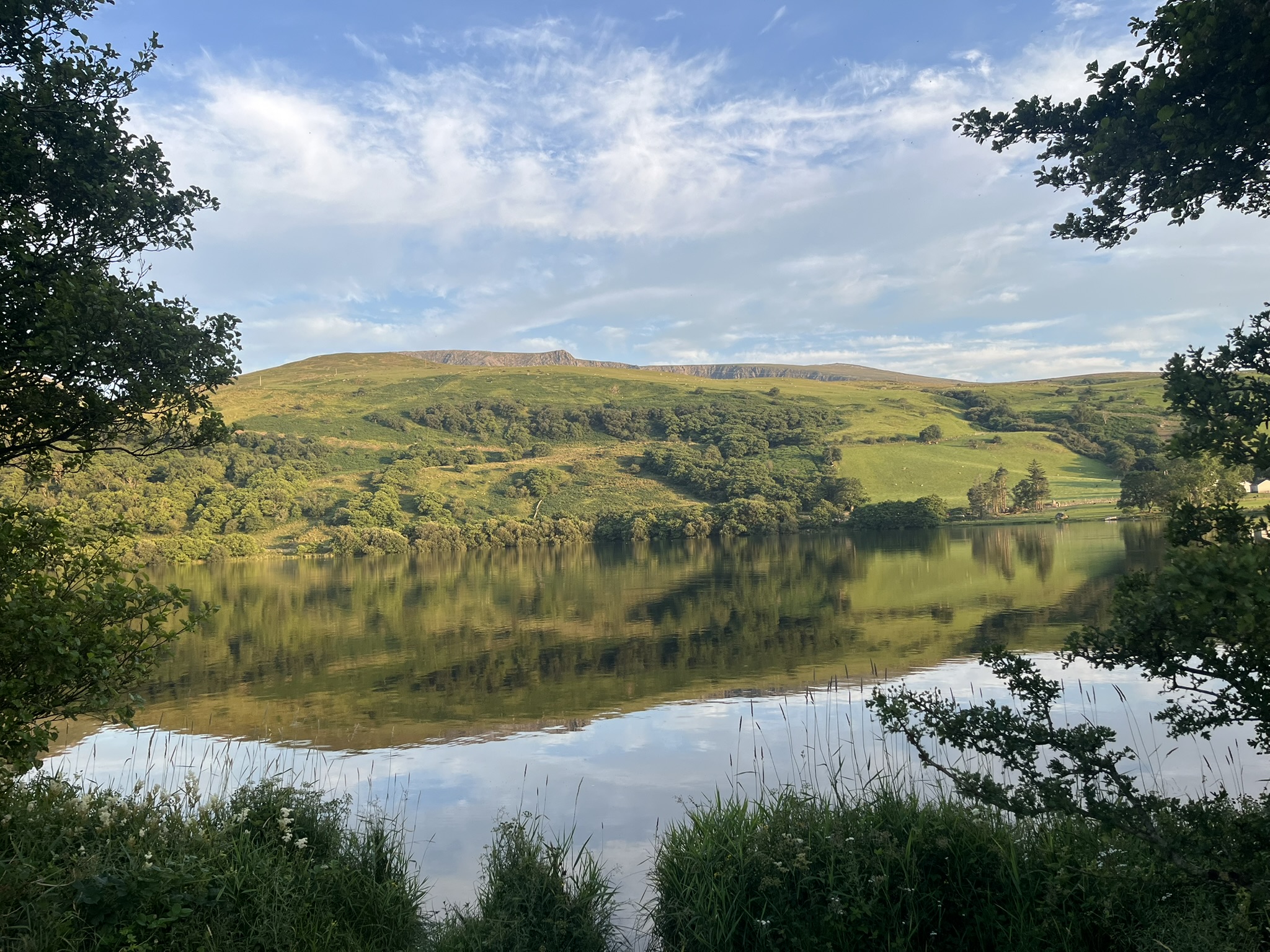
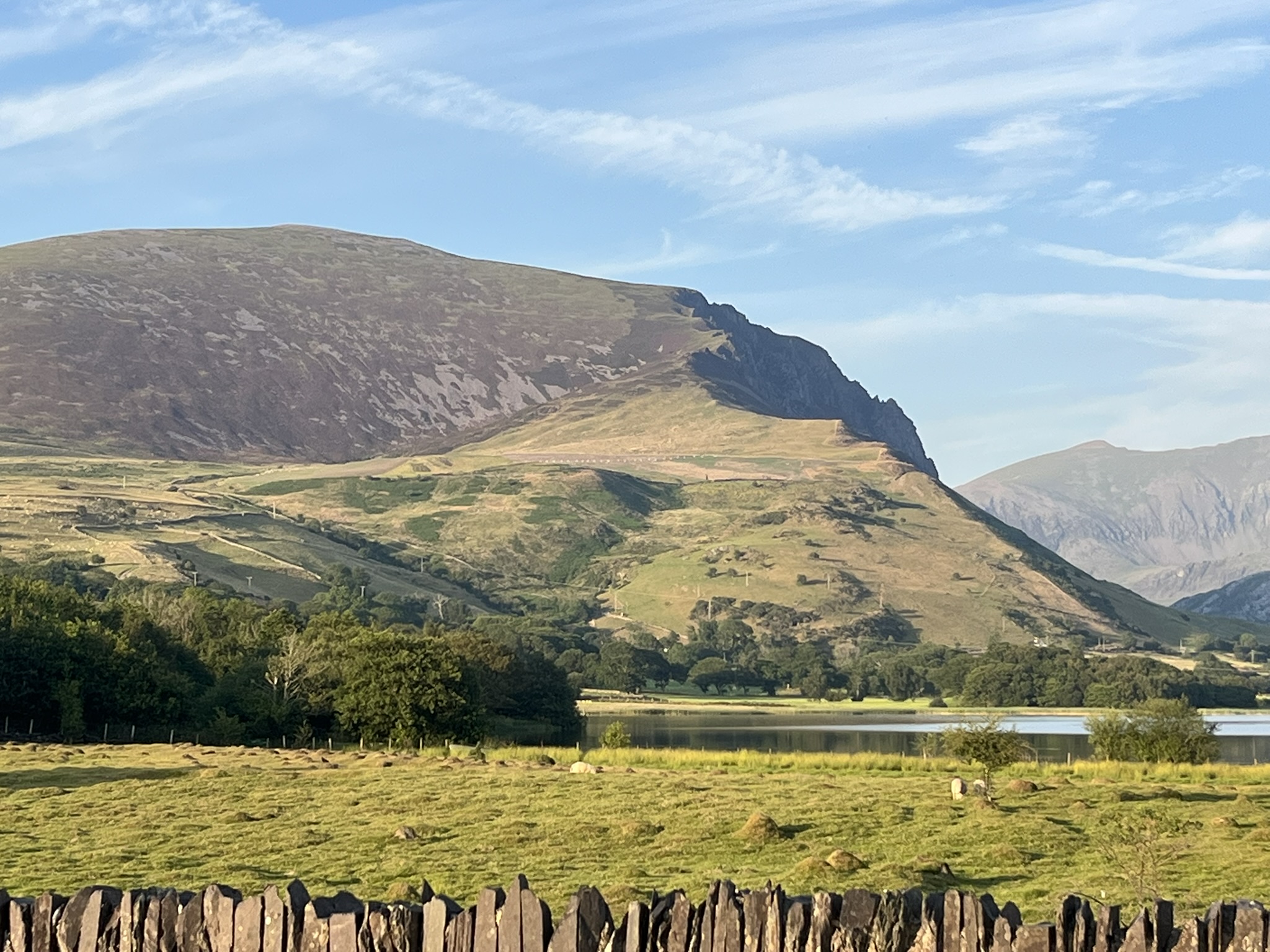
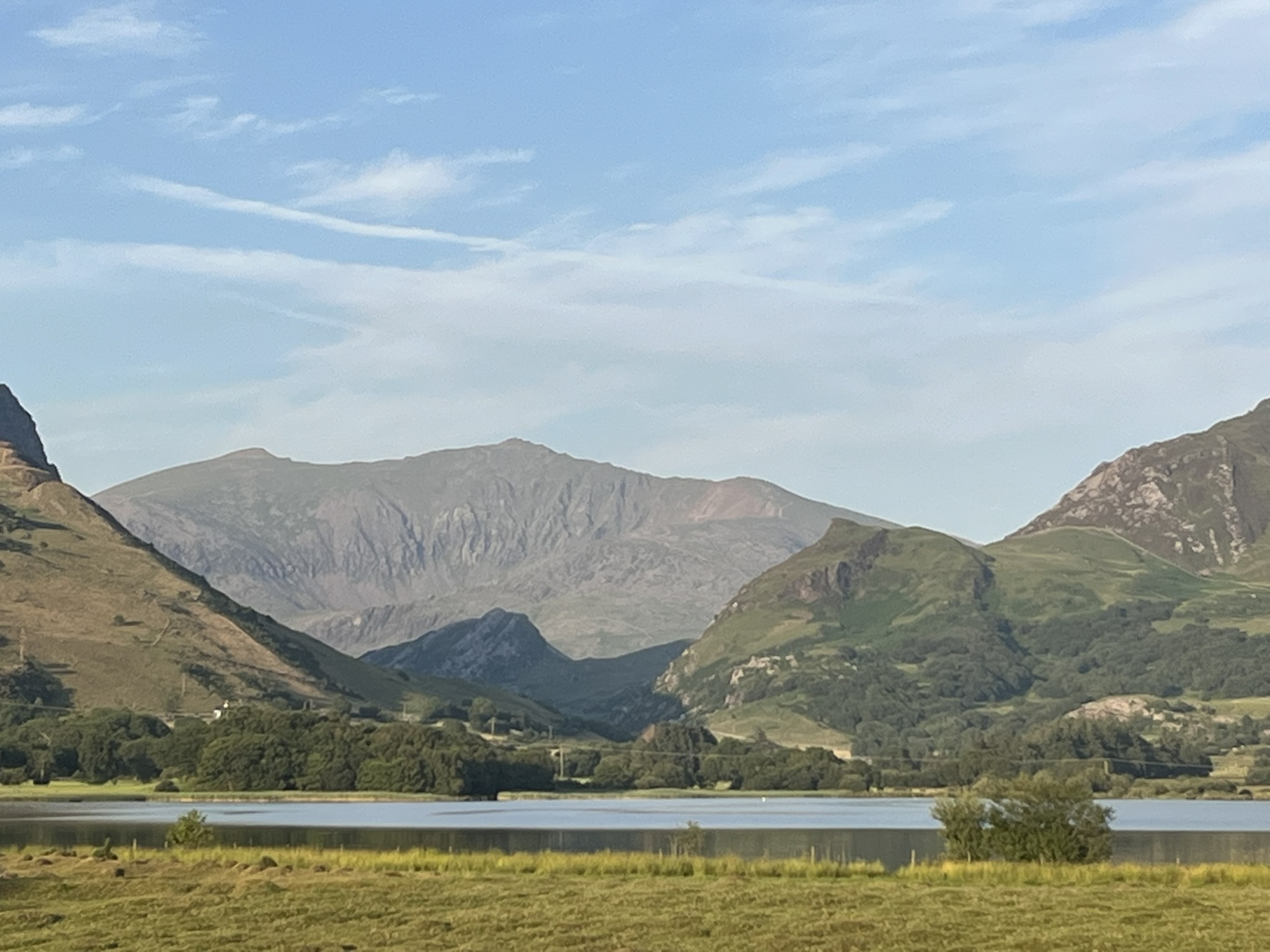
I called it a village just now, but Nantlle isn’t much more than a hamlet. Like most places in in Dyffryn Nantlle it’s an old slate-mining settlement. Right against the backs of the terraces that face south runs a long mountain, a continuous ridge of grey-black slate waste. Just to the east lies the long-drowned Dorothea Quarry. On the other side of the road is Llyn Nantlle Uchaf, and beyond it, Nantlle’s glories – to the south, the Nantlle Ridge, one of the great ridge walks of Britain, and east in the distance, Yr Wyddfa. All these peaks stood clear and proud in the evening sun.
My home for the night was Trigonos, a vegetarian guest house, retreat and ‘biodynamic farm’, opened in 1996. It occupies a cluster of crumbling buildings around an old mansion, Plas Baladeulyn. Baladeulyn (‘land between two lakes’) features in the fourth Branch of the Mabinogi as the place where Gwydion found Lleu transformed into an eagle in an oak tree.
Like the original occupant of the house, the quarry owner W.A. Darbishire, Trigonos doesn’t seem quite to fit in to the working-class Welsh-speaking community around it. But its spartan and ascetic ethos appealed to me – the owners offer wi-fi, but made it clear that they’d rather you didn’t use it – and walking in the grounds you could let your mind subside into ataraxia. (I gave a wide berth to the yoga class).
I waited till the sun was low in the sky, and then ventured out into the village. There’s no slate quarried here today, of course, and I wondered what occupies people now. Cars litter the pavements, and almost everyone must travel a distance to work. I wandered across to the old ‘barics’, the quarrymen’s quarters – the only ones, it seems, to have been situated inside a quarrying village. Today they’re occupied by micro-businesses, one of them the excellent Poblado coffee shop. There are no other shops in Nantlle, and the primary school is scheduled for closure.
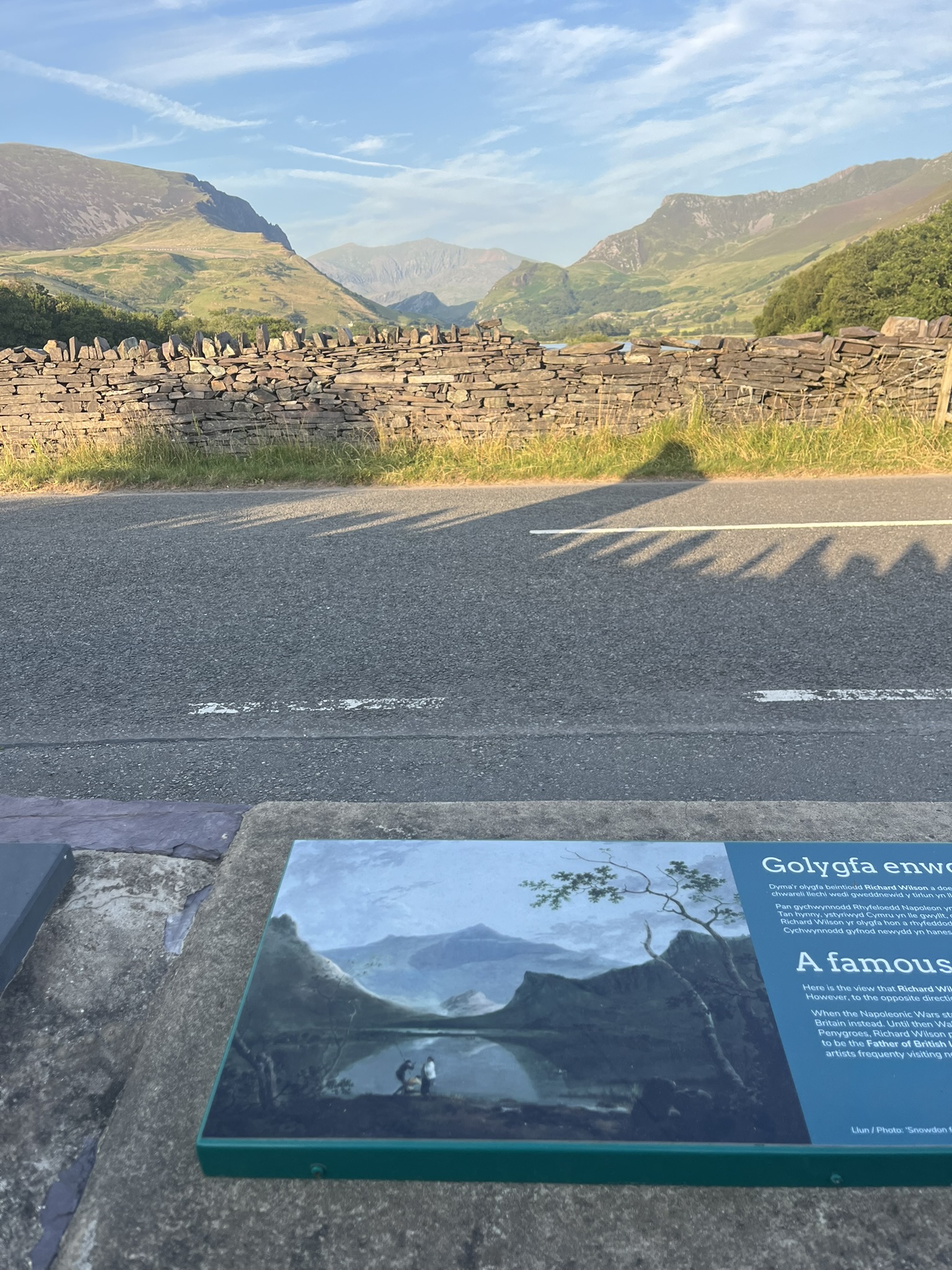
Next I strolled out of the village along the road back to Tal-y-sarn, to find the panel that commemorates the (rough) spot where Richard Wilson painted his famous picture ‘Snowdon from Llyn Nantlle’. In his other great mountain painting, ‘Llyn-y-Cau, Cader Idris’, he took several liberties with the basic topography of the mountain, but here he reproduced the mountains much as they stand. He did, though, for compositional reasons, increase the visible extent of Llyn Nantlle, as if his viewpoint was higher than it possibly could have been. As often, Wilson set the model for later artists, and his view was repeated over and over again by his successors.
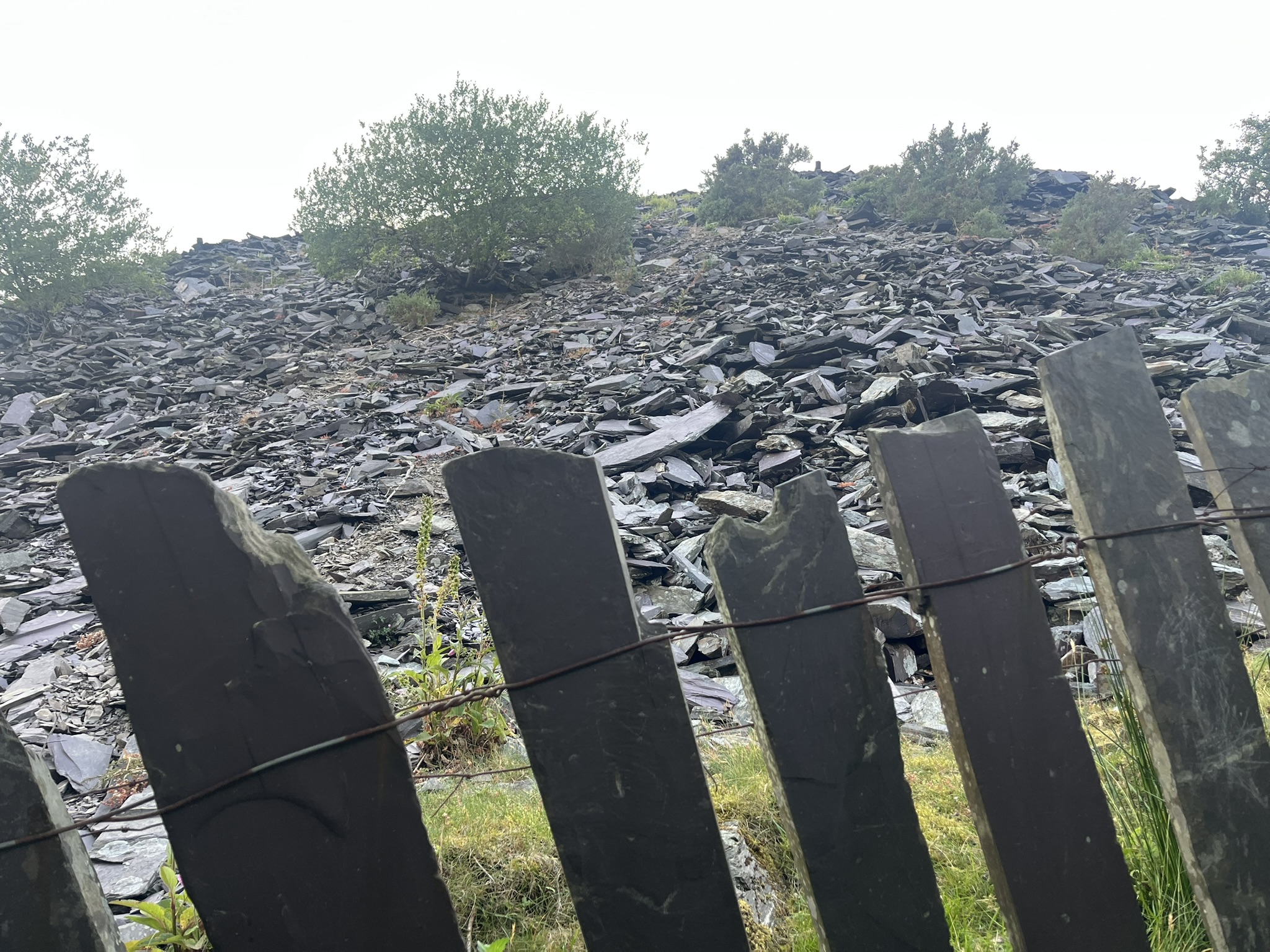
I spotted a sign for a path and bridle path leading from Plas Baladeulyn up beside the quarry waste. These tips, like the ‘barics’, give you some inadequate notion of how desperately hard was the life of a quarryman. The blocks and slabs of discarded slate had toppled down the slopes in a crazy, random chute – in sharp contrast to the extreme care and skill needed by the craftsmen to carve finished slates. The edge of the tip was marked by old crawiau, slate lengths pitched vertically and wired together as a fence. I walked a little way up the path – eventually I would have reached Y Fron – before the rampant bracken growth got the better of me, and I retreated.
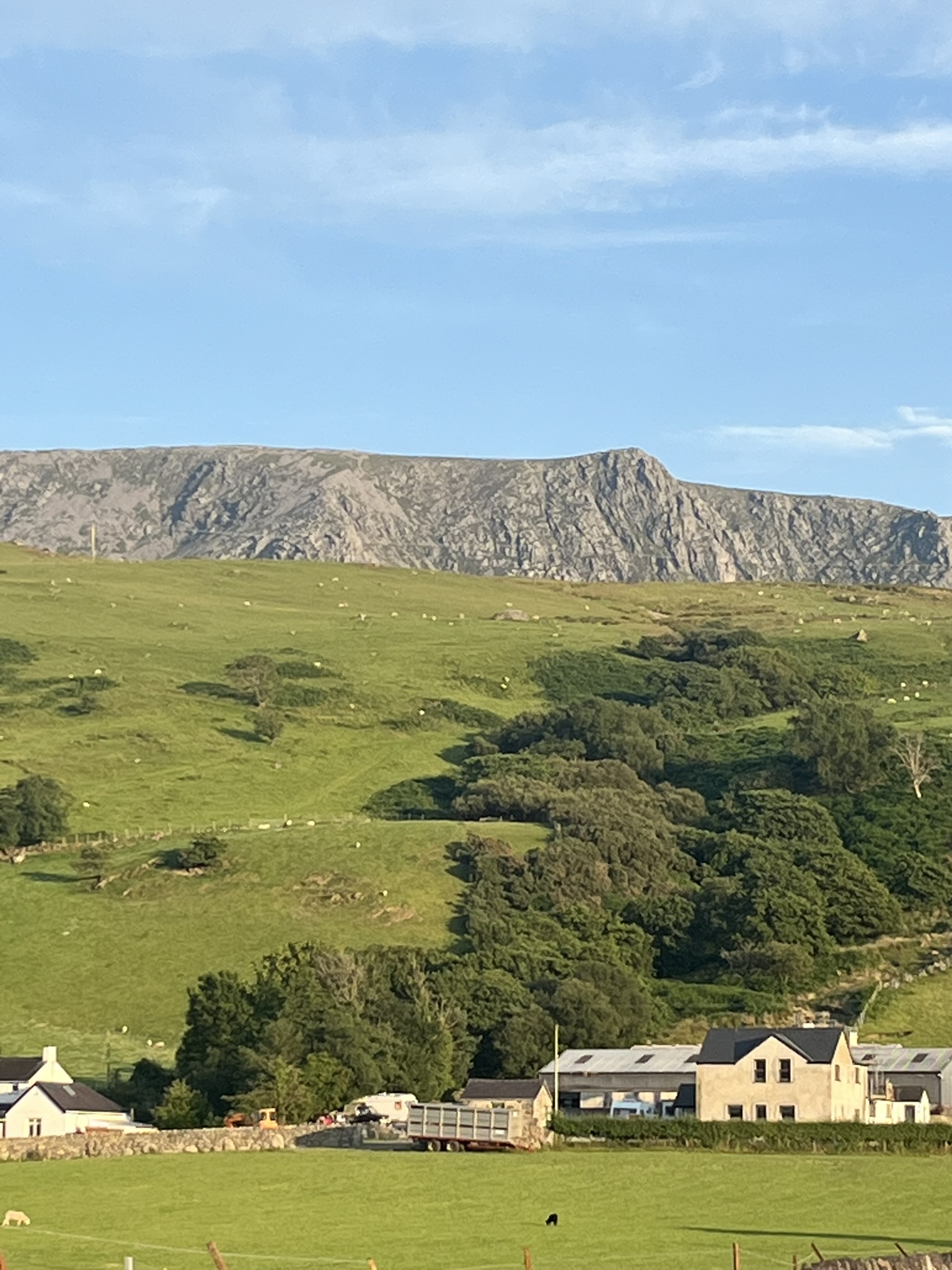
By now the sun was almost out of sight, and back at Trigonos I crossed a large meadow, planted, no doubt, by the ‘biodynamic’ farmers (they’ve recently placed new beehives on the edge). A mass of flowering grasses, unmoved by any wind, glowed in what was left of the light. I walked down the slight slope along a long straight path to reach the shore of Llyn Nantlle. A slate bench stood there, an aid to observation and meditation. The surface of the lake was static, so that the hill opposite gained almost an exact inverted twin in the water. Beyond the hill rose a line of white crags, Craig Cwm Dulyn, part of the Nantlle Ridge. I remembered the exhilarating walk, all the way to Rhyd-ddu, I’d shared with friends in September 2005.
During the night a breeze arrived, stirring the curtains and my sleep. By morning it had gathered pace. Before breakfast I repeated the meadow walk. Now the grasses were shaking their seedheads in unison, and the surface of Llyn Nantlle was on the move again.
A mile or so up the valley is the hamlet of Drws-y-Coed. Copper was once mined here. In his essay on the possible human effects of subatomic particles, ‘Aur Drws-y-Coed’, T.H. Parry-Williams remembers as a child referring to copper as ‘Drws-y-Coed gold’. In another essay he writes that having seen Drws-y-Coed you could see the world, but that you would need to see something of the world to see Drws-y-Coed properly.
But there was no time to go there this morning. The hot streets of Caernarfon were waiting.


Leave a Reply