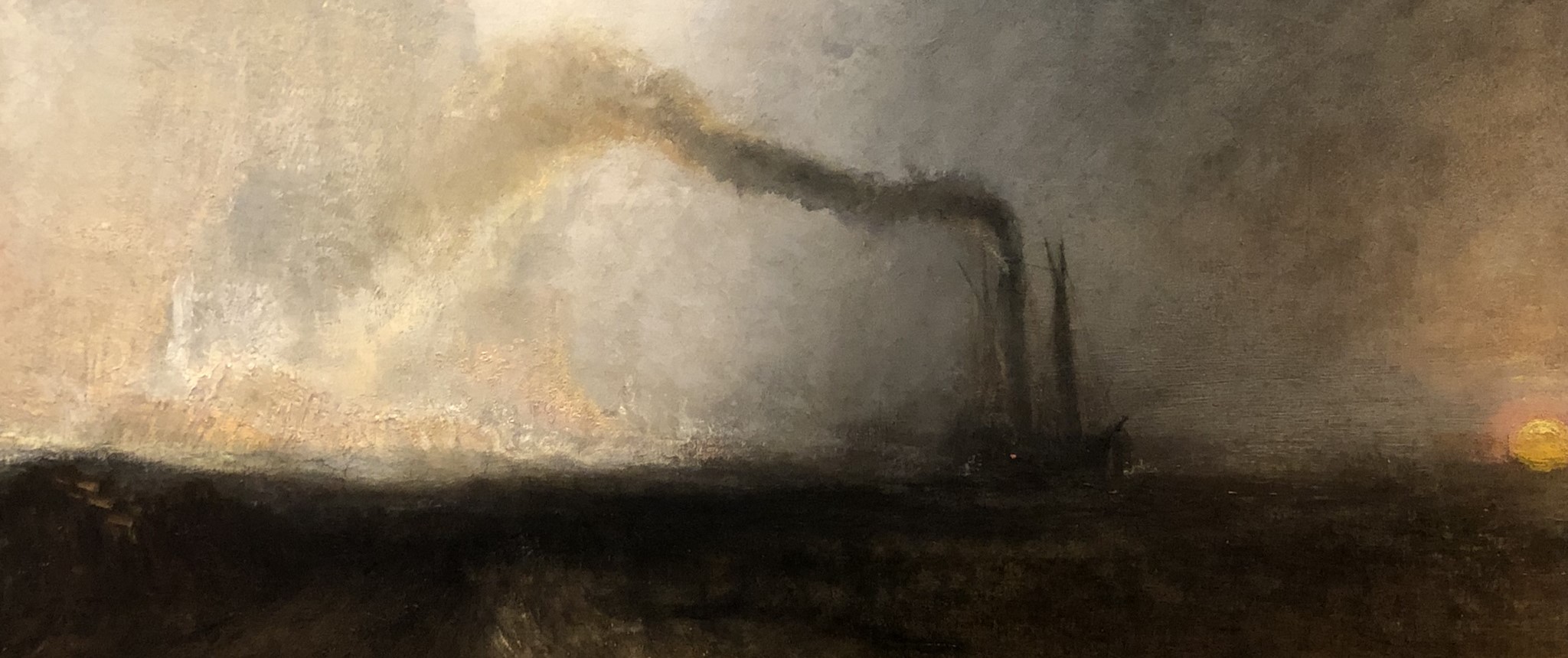
At Tate Britain is an exhibition that’s received a great deal of critical praise. That’s surprising, in a way, because it features two of the stalwarts of British art, whose works are familiar enough to most art lovers: J.M.W. Turner and John Constable.
What’s attracted attention about the show is its juxtaposition of the two artists – both their lives and their art – over a period of many decades (Constable died first, in 1837). They were born within a year of each other. They worked in similar media – they were both pioneering watercolourists – and on similar themes, mainly landscapes. They were both obsessed by nature, colour and light. They were friends and occasional enemies, and competed for public attention, especially through the exhibitions staged at the Royal Academy.

But they were also very different people and artists. Constable was a product of the rural middle class, whereas Turner was the son of a barber and wig-maker, and lost his mother to mental illness at an early age. Constable stayed mainly in his native Suffolk and seems never to have been interested in overseas travel – he was almost exclusively a painter of the flatlands. Turner was by nature an adventurous soul. As a young man he travelled repeatedly in the wild uplands of Wales, in what turned out to be an apprenticeship for explorations in Europe, especially in the Alps.

The artistic temperaments of the two were also quite different. Having found his subject matter in his immediate neighbourhood, Constable devoted his career to exploring it in ever greater depth, impervious to the powerful currents in art that moved around him. Turner, by contrast, was open to wider art movements. Early on he absorbed the classical landscape conventions of Claude Lorrain and others, and intensified their artistic language in his own grand, ‘Sublime’ canvasses. But then he developed his own instincts, becoming ever more radical, until towards the end of his life he was producing near-abstract paintings that bemused the public.
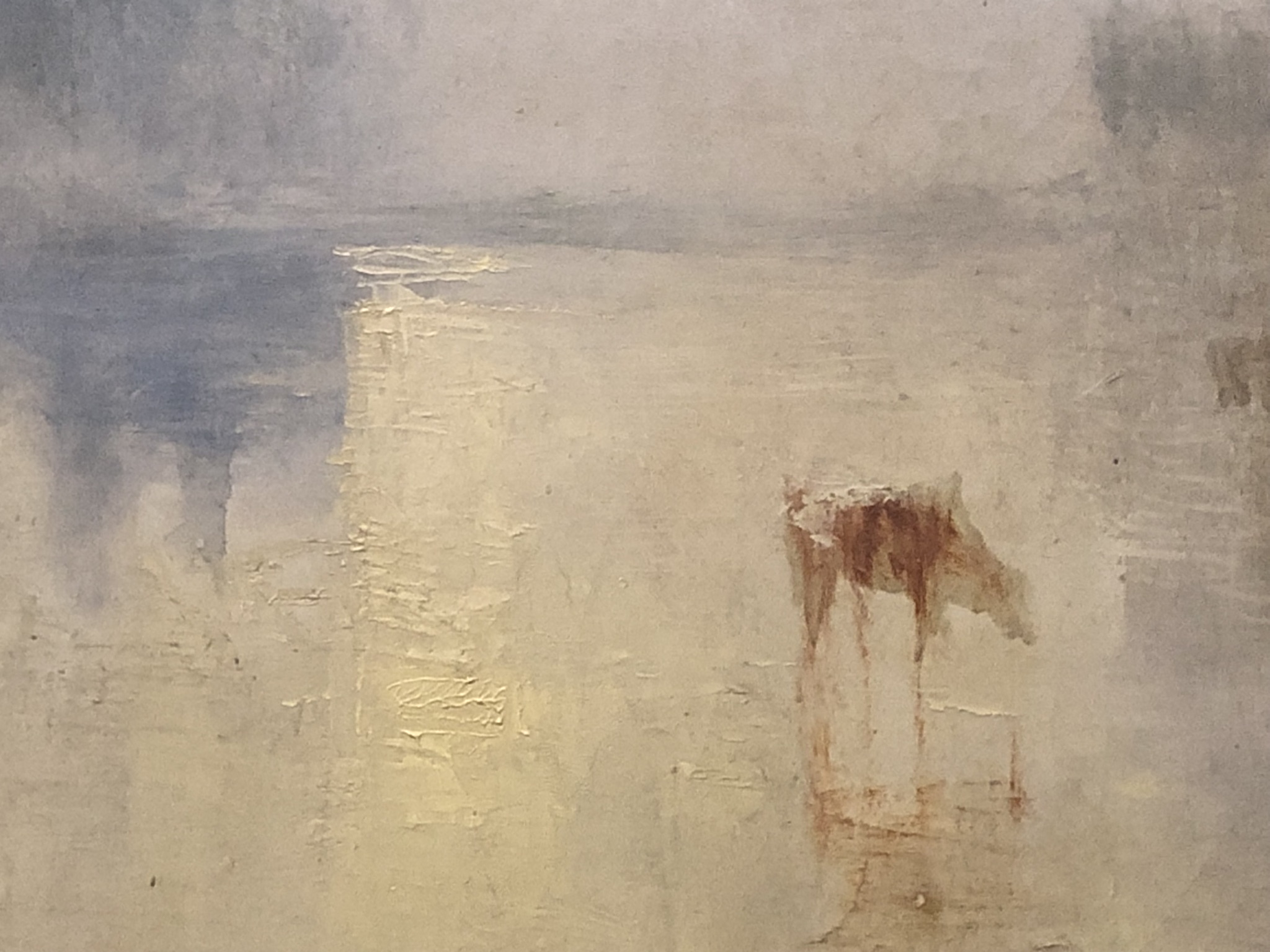
Constable gives us a settled, contented version of the East Anglian countryside. As the curators point out, he has a reactionary, backward-glancing view of the work of the labourers he inserts in his scenes. There’s no trace in them of the social harms of the enclosure movement, or the extreme agricultural hardships that followed the end of the Napoleonic wars. A harvesting scene shows women in their fine gowns languidly helping with the work or taking their ease, just as in similar pictures by George Stubbs decades before.

Turner’s background sensitised him to social and political difference and conflict. One of his earliest oil paintings, Dolbadern Castle (the curators aren’t aware it’s now always spelled ‘Dolbadarn’), has a firm political subject: it shows the imminent imprisonment in the castle of Owain Goch by his brother Llywelyn ap Gruffudd. Politics remained a Turner theme. The show juxtaposes two huge Carthage pictures – of the construction of the city by Queen Dido, and then its destruction by the Romans and their abduction of its children. A similar scene shows the arrest of the Roman poet Ovid, about to be exiled from Rome to the distant Black Sea settlement of Tomi. The arrest and incarceration theme echoes that of Owain Goch, painted forty years earlier. Turner was also far more attuned than was Constable to the social and technological changes happening in the first half of the nineteenth century, being ready to incorporate in his pictures contemporary events like the burning of the Houses of Parliament, and the advance of steam-powered railways and ships. The newly built pier at Brighton makes an appearance in Constable’s view of the shore, but he’s more interested in showing the dying traditional industry, fishing.

The chronological arrangement of the exhibition allows us to see how the two artists changed alongside each other. Turner’s artistic ambition made his transition to every larger canvasses relatively easy, but you begin to feel an uneasiness in Constable as he switches from relatively small pictures to much larger ‘six-footers’. At the same time his paints become stronger and his brushes thicker, so that the surface of the later landscapes, clogged and multicoloured, seem to resemble the paintings of Emil Nolde and other German Expressionists. ‘On the river Stour’ has a passage of paintwork not too away from Jackson Pollock. Turner’s textures, too became more complex.

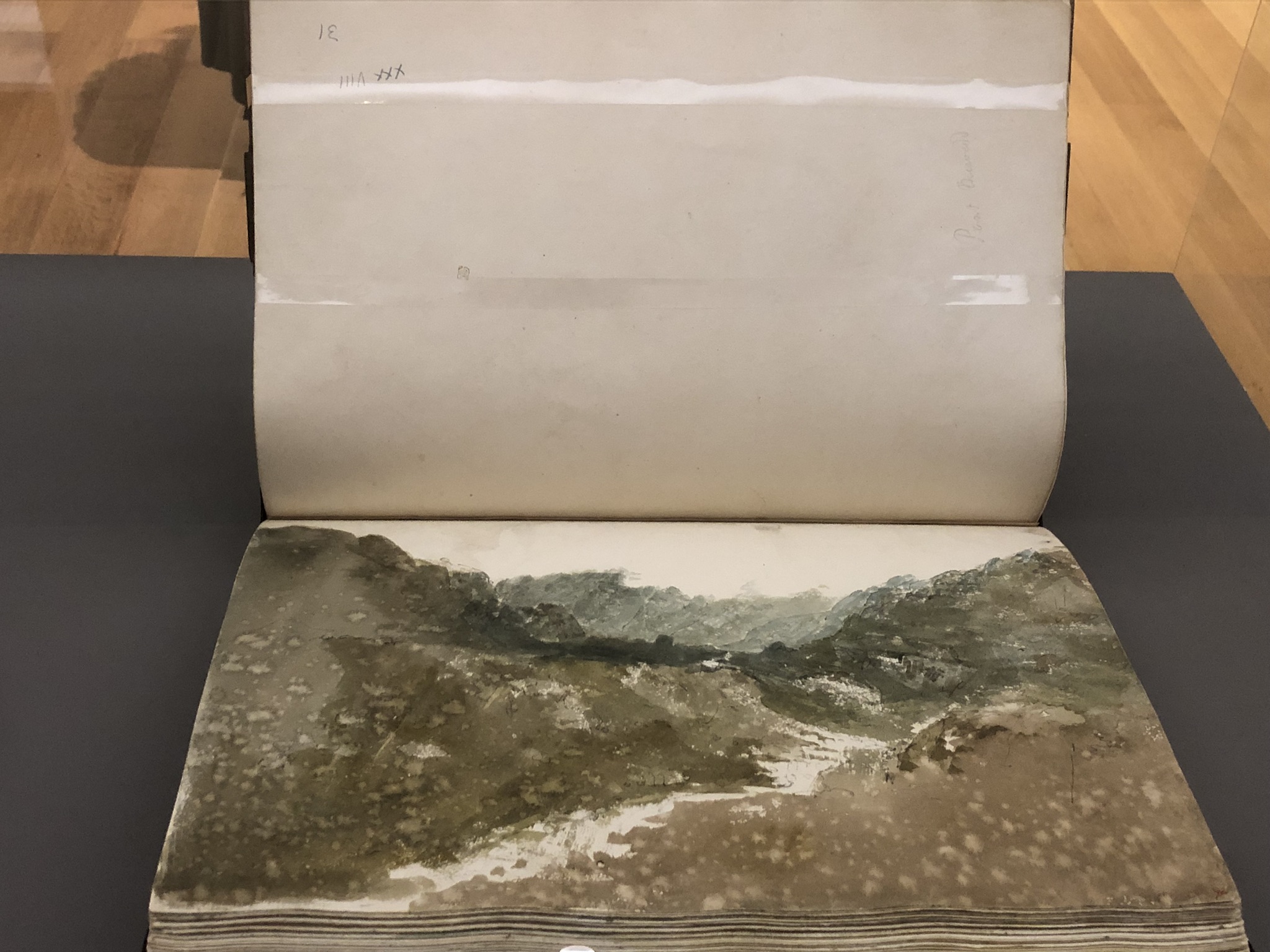
Many of the larger works on display are familiar. Where this exhibition scores is in its inclusion of many sketches and other preparatory works by both artists. One of the earliest is Turner’s miraculous on-the-spot watercolour drawing, in his Hereford Court sketchbook, of the area just south of Llyn Cau on Cader Idris, its surface blotched with raindrops. Equally compelling are Constable’s pioneering studies of clouds in the early 1820s, the result of hours of patient observation of the sky. These and other works bring us as close as we can get to the act of making art. The curators also show us the painters’ paint boxes and palettes, and Turner’s fishing rod, and a clip from Mike Leigh’s excellent film Mr Turner: these too give us insights into how two outstanding artists lived and worked.


Leave a Reply to Richard Saville Cancel reply