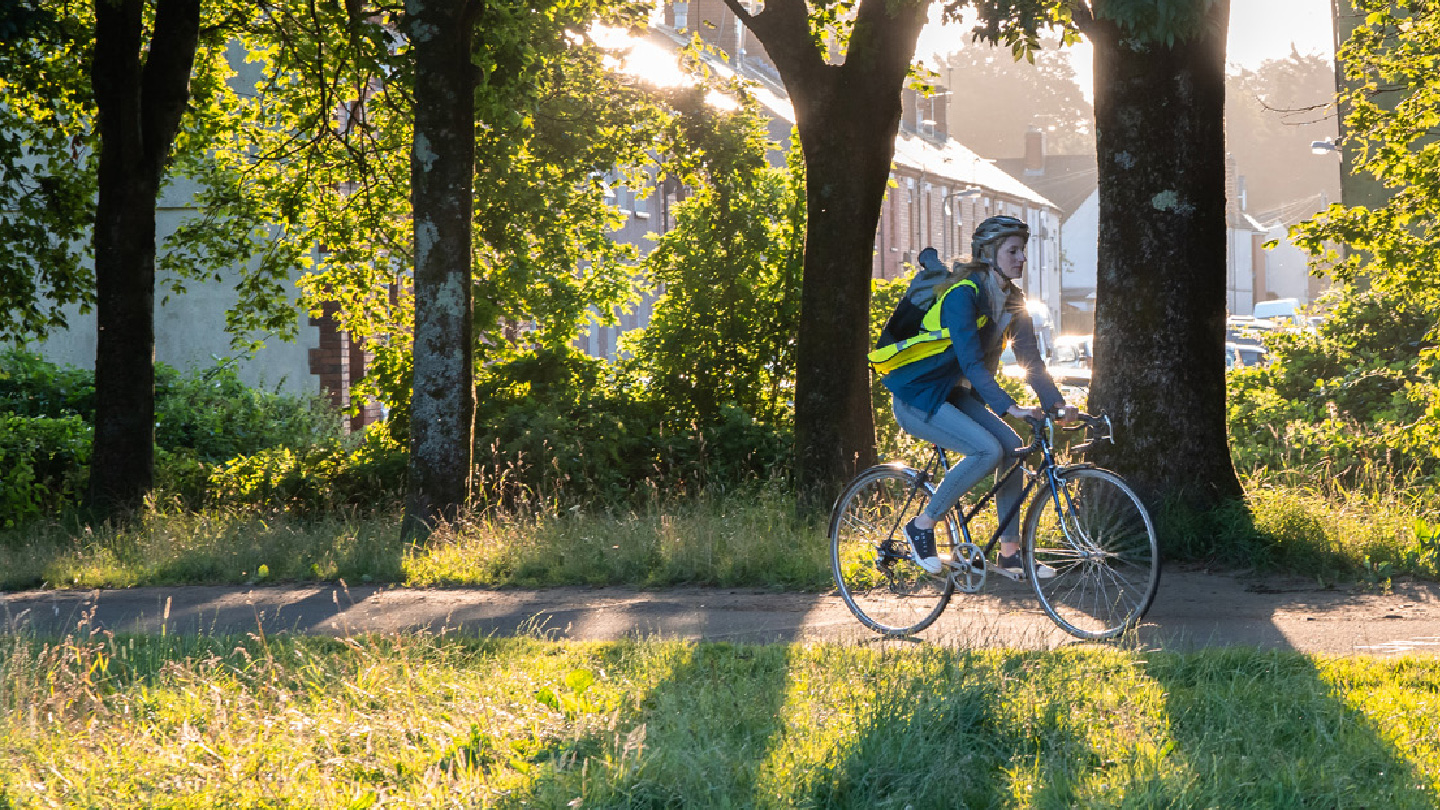

Who could object to ‘active travel’? Who could possibly deny its health, environmental and economic benefits? Who could be in favour of being unfit or overweight, or encouraging unsafe roads, traffic jams, potholes and pollution?
So, if it’s so obvious a virtue, why is active travel – walking and cycling as the natural mode of choice for short everyday journeys – having such a hard time? In Wales the government legislated for it in the Active Travel (Wales) Act 2013, the first such legislation anywhere in the world. The Act set up a national Active Travel Fund, and an Active Travel Board to give the government advice on policy. And yet hardly any progress has been made in the thirteen years since, with one exception, the introduction of a 20mph limit on residential roads. In some areas things have gone backwards: even fewer children walk or cycle to school now than in 2021.
This week I went along to a meeting about active travel organised by Wheelrights, Swansea’s cycling campaign. Kirsty James, chair of the Active Travel Board, and Mike Hedges MS, both spoke, and they were followed by a lively discussion. I left feeling that, despite the speakers’ diplomatic language and efforts to be positive, much of what energy there was behind the active travel agenda in Welsh government has dissipated.
Why has that happened? First, consider the power of the road and car lobby. It’s massive compared with the influence of promotors of active travel. Car manufacturers flood with the airwaves and ‘social’ networks with persuasive advertising (which never features pedestrians or gridlocked roads). Planners stick to the same assumptions about the primacy of vehicles that have reigned supreme since the 1960s. Governments almost invariably bow to car interests, for example by continuing to freeze petrol taxes.
That power could be seen at work in the reaction to Lee Waters’s brave introduction of the 20mph speed limit in Wales in 2023. It’s true that the preparation of the public for the change was poor, but the reaction was fast, furious and irrational. It resulted in the government backtracking and conceding that local authorities could have the authority to reassess routes and reimpose the higher 30mph limit. Since then ministers have been very reluctant to sing the praises of a policy that saves lives and prevents serious injuries – casualties in residential areas fell by a quarter in two years – and that has attracted favourable attention in other countries.
This ‘shamefaced’ approach to its own pioneering policy seems to have made the Welsh government nervous and jittery about further moves to improve the position of non-car travellers. In August 2024 the Active Travel Board, then chaired by Dafydd Trystan, issued an initial report, but the Government didn’t make an official response to it, or act explicitly on its nine recommendations. The Active Travel Fund has been suspended, with serious effects, for example, on the making of new cycle tracks. The Welsh government pulled out of the National Travel Survey in 2013, and has failed so far to establish an adequate replacement survey for Wales. As a result, it’s now very difficult to judge progress or failure of a travel policy in the absence of a baseline of secure data.

Taking their lead from the Welsh government, local authorities have slackened the pace of progress. Astonishingly, Swansea Council doesn’t have its own transport strategy. It seems quite content to let the roads clog with ever-increasing quantities of motorised traffic, while devoting a pittance to other forms of transport.
It’s hard to avoid the conclusion that the Welsh government, frozen in the harsh headlights of Reform and other anti-active travel interests, has lost the will to continue in any serious way the agenda set out in 2013. Without firm strategic leadership the impetus behind active travel can’t be sustained.
In a report published in September 2024 Audit Wales concluded that ‘despite increased spending through its Active Travel Fund and a new, wide-ranging, delivery plan, the Welsh Government remains a long way from achieving the step change in active travel intended through the Act’. In December last year the Senedd’s Public Accounts and Public Administration Committee, of which Mike Hedges is a member, published its report on active travel. It called progress ‘painfully slow’. The government’s stated target of 45% of journeys to be made by sustainable modes by 2040 looks unattainable on current trends. The Committee asked for a commitment to long-term funding, stronger leadership, and a renewed focus on behaviour change and inclusivity.
This all looks bleak enough. What about the future? Senedd elections take place on 7 May 2026. If Reform forms the new government, presumably ‘active travel’ will be branded as ‘woke’, and all government activity in the area will cease. If, on the other hand, a coalition excluding Reform emerges, there’s a chance that a fresh start can be made, especially if the Greens are part of the new government.
There’s no lack of advice and models for improvement. The Active Travel Board issued its second report in 2025, and made six fresh recommendations, with an accent on restoring ring-fenced funding, increasing inclusivity and removing barriers. Members of the Senedd Public Accounts Committee visited Slovenia, where strong leadership from government, European Union grants and multi-year funding settlements have built an energetic active travel system, including an impressive cycling network.
What’s also needed is new thinking on calming the car and improving provision for buses, a key ally of active travel. In the Wheelrights meeting someone pointed out that if the new Highway Code established the idea of a priority hierarchy on roads, with pedestrians and cyclists at the top, why is it that pedestrian and cycle crossing lights almost always give priority to motor vehicles? The bus system in Wales has been in continuous decline for many years. It needs more than increased public intervention in route-planning, already planned for Transport for Wales. More frequent and more reliable buses are essential if people are going to be persuaded to leave their cars behind, and if we’re to avoid the permanent gridlock that faces us as more and more vehicles are added to our roads every year.


Leave a Reply