

Cardiff is a thriving place. Big new developments are announced almost monthly. Recent ones include the new BBC Cymru Wales building near the station, the electrification of the Valleys railway lines and the massive Embankment complex. But while the Council pours resources into stimulating and supporting commercial growth, it leaves some of its basic public services to rot.
On Saturday 7 February, National Libraries Day, hundreds of people plan to converge on the Central Library in Cardiff for a ‘read in’, to protest against the Council’s intention to cease funding seven of the city’s libraries and further degrade the Central Library.
The branch libraries could close or be handed over to ‘the community’. They include some that are used by hundreds of people a week, like Whitchurch, a building I visited a couple of weeks ago (it was closed: Cardiff assumes people don’t read on Wednesdays). Cathays Library, one of the finest Carnegie library buildings in Britain, is to be handed over, to anyone, ‘community’ or private, who will take it, as a ‘café library’, presumably a standard Starbucks with a couple of bookshelves. Only five years ago the building received a capital CyMAL grant of £1m from the Welsh Government to restore its interior. The Central Library, opened only in its new premises in 2009, is now closed on two days a week and has already lost its top floor (so that its local and Welsh collections are inaccessible). It is likely to lose yet more space, as unrelated Council functions are moved in. Many books have already been removed, and experienced staff face redundancy, as ‘community volunteers’ are sought to take their place.

What will the people of Cardiff miss, if their Council – astonishingly, a Labour-controlled Council – has its way? Not just access to books. They will lose many of the few indoor publicly owned places left in the city, where anyone can go, to read, study, meet in groups, or just dream. They will lose free internet access, essential to those who lack it at home, and access to online information, services and advice. No trained and experienced staff will be there to help them. Their children will be deprived of the books, magazines and other resources that develop their reading and their imaginations. The memory of the city, as recorded in its local studies collections, will be forgotten.
Those who tout the idea that library services can be run effectively by the ‘community’ – a word now debased and emptied of meaning – are moved either by cynicism or by ignorance of the way libraries work, and especially how individual libraries are now tied in to wider networks of public knowledge provision. In a recent speech Leighton Andrews AM said
Communities are taking control of library facilities. In some places these are community-run social enterprises or cooperatives, in others we have the examples of town and community councils running such services, able to raise additional resources to do so.
Someone should tell him that there is no known instance of a ‘community’-managed library in the UK being able to sustain the kind of service offered by a professionally administered service. Volunteers can do many valuable things, but the truth is that most libraries handed over to them soon decline and fail, from a poverty of resources and a lack of expertise to provide what people need and want.
I suspect the leaders of Cardiff Council are similarly challenged. And almost certainly they’re unaware of the distinguished library history of their city. Someone should tell them that the pattern of library provision that exists today, though weakened, owes its existence to the heroic work of one the UK’s public library pioneers, John Ballinger.
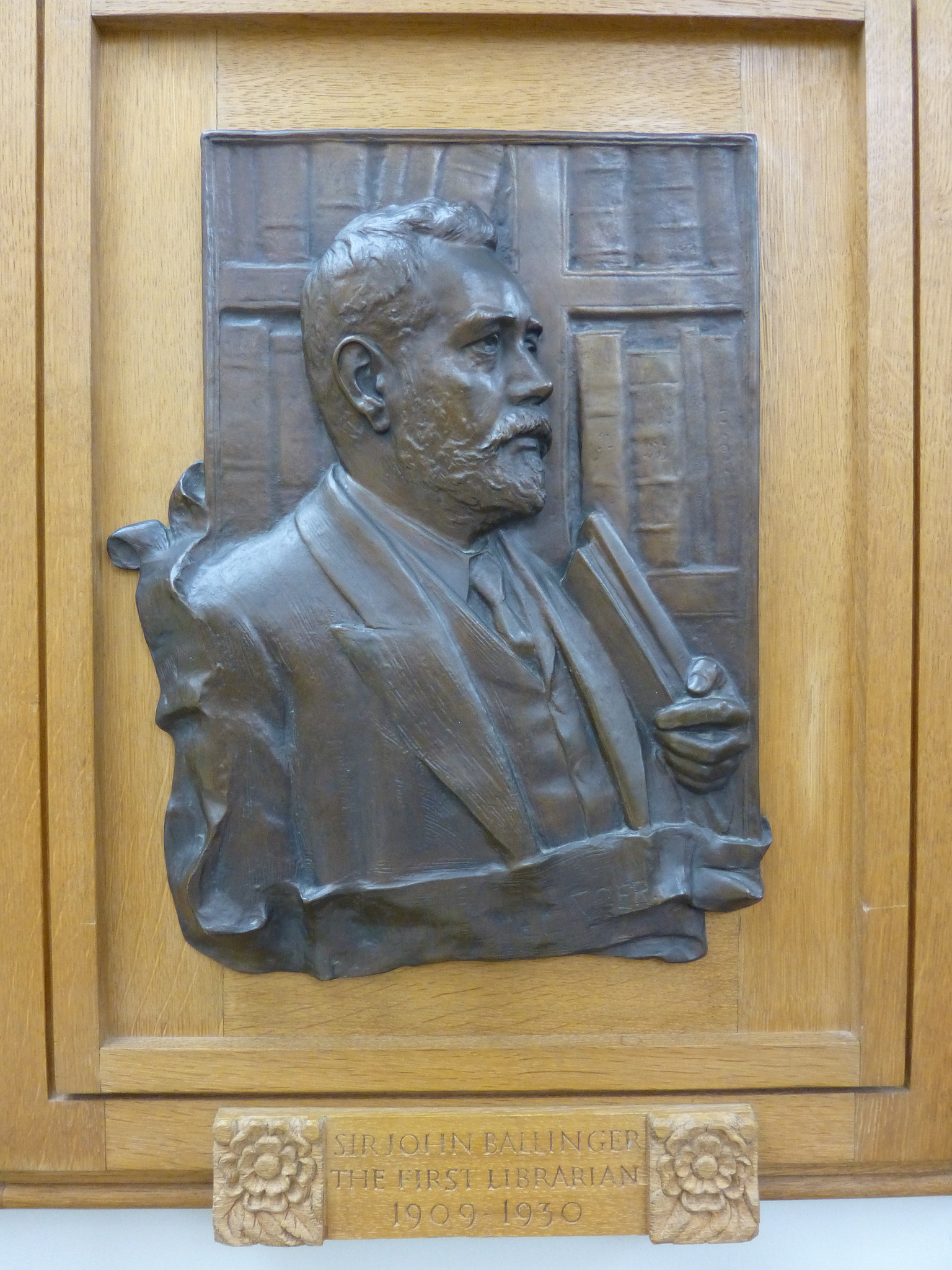
Ballinger arrived in Cardiff as its Librarian in 1884. He was just 24 years old. The Council had decided in 1863 that it would provide a library for all its citizens, under the ‘penny in the pound’ provision of the 1850 Public Libraries Act. Cardiff was the first town in Wales to do so. In 1882 the ‘Old Library’ in The Hayes was opened to the public. Ballinger hugely extended the library and its services. Under his direction the collection grew enormously, to 100,000 volumes, and the number of number of books borrowed increased from 7,000 to 750,000. He staged exhibitions, made extensive provision for children, especially through establishing school libraries, set up branch libraries, including the wonderful Cathays building, and was especially interested in new technologies. He developed a wide reputation for his progressive practice, published extensively and was a leading member of the Library Association.
By the time Ballinger left Cardiff in 1908 to become the first Librarian of the National Library of Wales, Cardiff possessed a library service that could stand comparison with most of the major city libraries of the UK. As he left the town, tribute was paid to his achievements:
… he sought to bring the library and its treasures to the very doors of the people; to make the institutions under his charge a vital and indispensable part of city life; and to bring all classes of the community into close and intimate relations with it.
It would be hard to express better the proper role of anyone in charge of a public library today.
In the 100 years since, despite several relocations of its central library, and the downgrading of the service within the local authority, the service has survived. The present central library building was opened in June 2009 by the Manic Street Preachers and an inscription, taken from the lyrics of one of their songs, was written on a plaque to commemorate the event: ‘Libraries gave us power’.

That phrase encapsulates what libraries are, or should be, about: giving power to everyone – to discover and learn, to spark imagination and fulfill ambition, to challenge the power of others. This is the power that the current political leaders of Cardiff now wish to withhold from the people they were elected to serve. If they’re allowed to have their way Cardiff, far from ranking alongside the library services of cities like Birmingham, Manchester and Liverpool – all of which have re-committed to their libraries in the last two years – will have a library service to be ashamed of. More important, its residents will have been robbed of a huge and loved resource.
All local councils face painful dilemmas in responding to the ‘austerity’ visited on them by the Westminster government. It’s also true that all public services need to adapt and change to suit the times. But what Cardiff Council is planning to do to its library services is impossible to defend under either justification.
And in the process it may be in danger of breaking the law. Many people seem to be unaware that the provision of a ‘comprehensive and efficient’ library service is a statutory requirement on local authorities. If Cardiff libraries cease to be comprehensive and efficient, how long will it take, I wonder, for the responsible Welsh Government Deputy Minister, Ken Skates AM, to insist on the law being obeyed?


Leave a Reply to Barbara Cancel reply