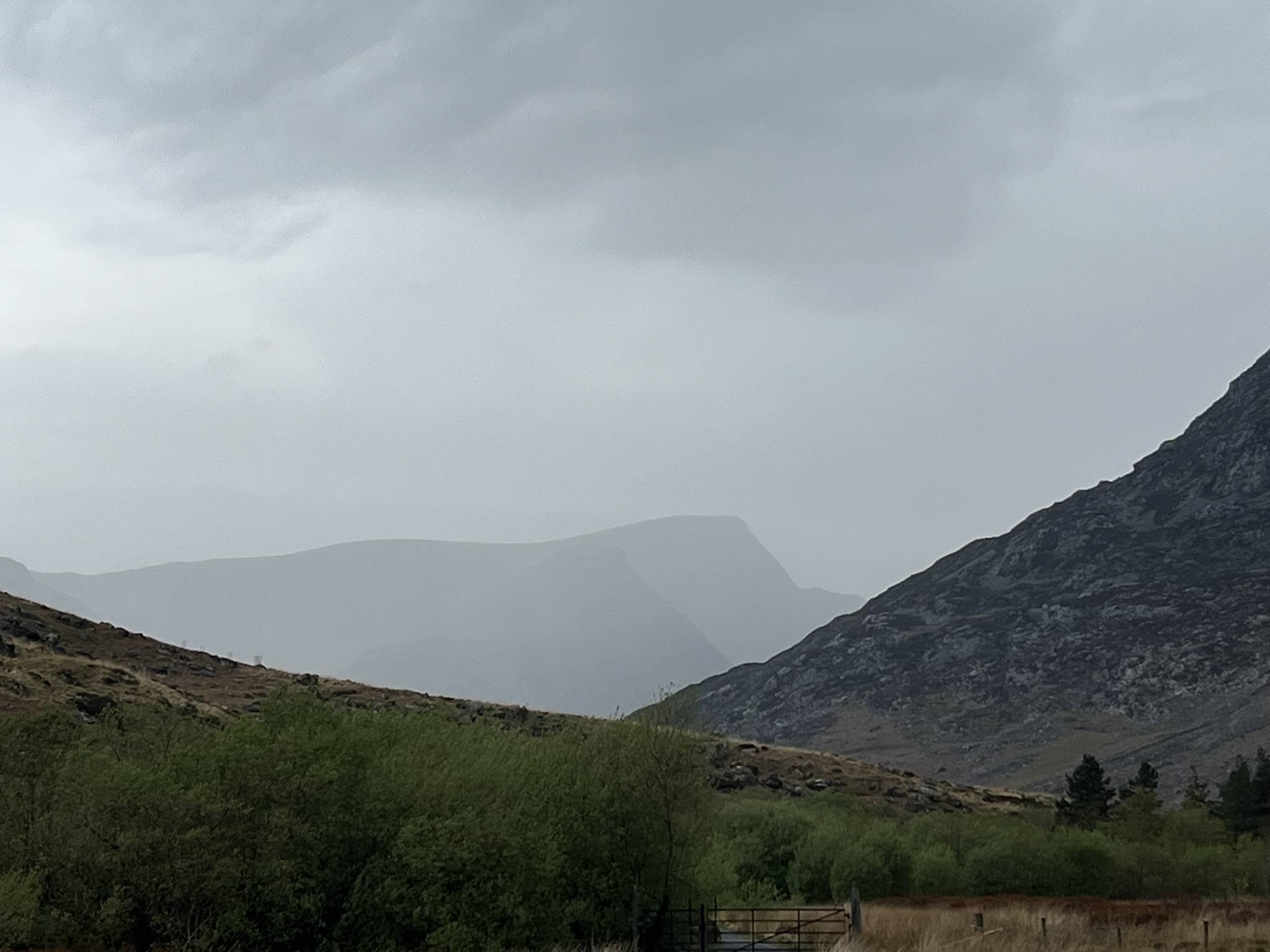
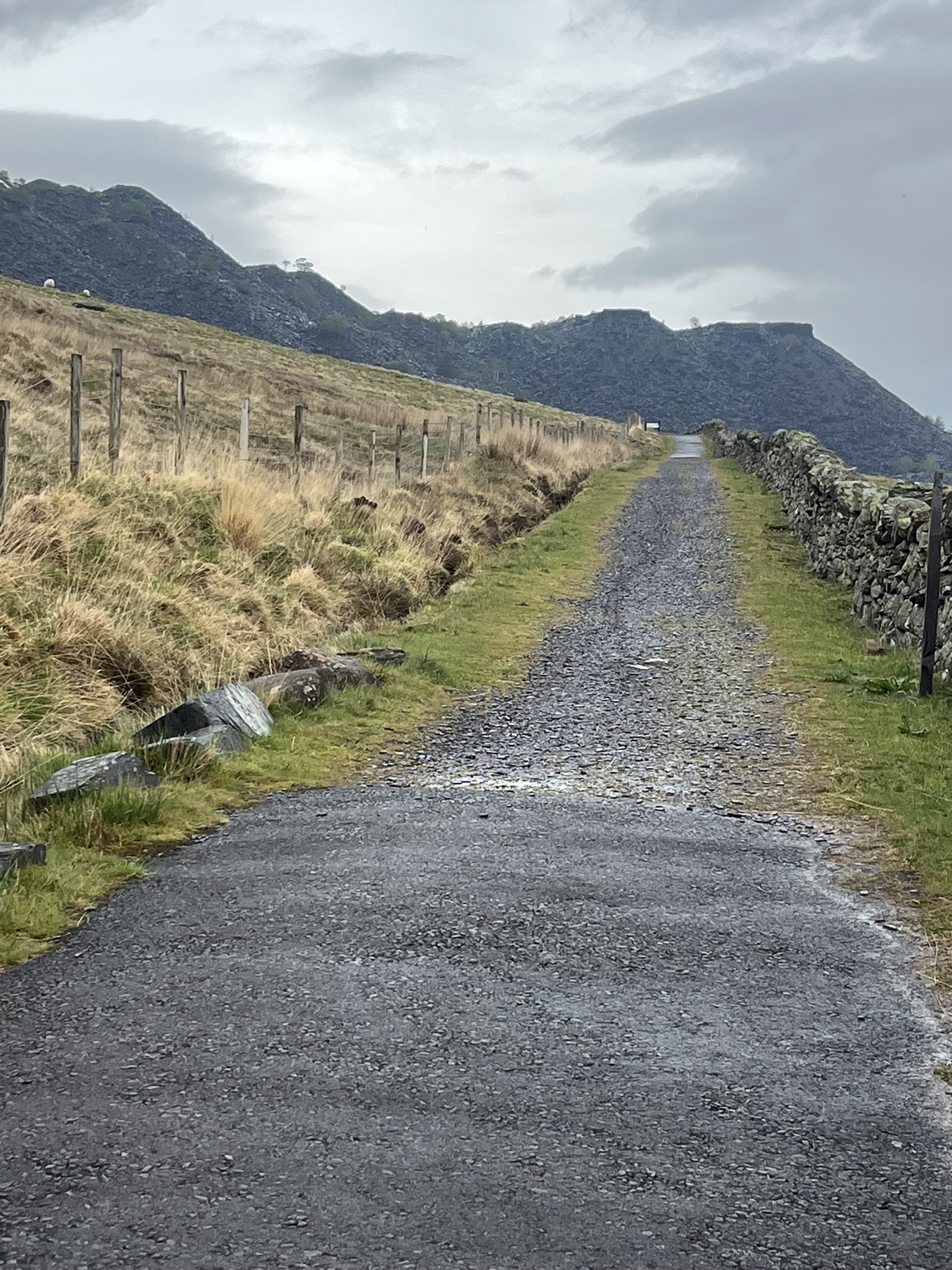
On the map today’s walk looks straightforward. The Trail leaves Capel Curig and moves east and then north to Bethesda, its final destination. Surely there should be no navigational problems this time? The worst we should face will be spots of rain. Some small rain has already fallen, the all-sun weather of the last few days has gone, and the wind has veered.

The three of us leave Joe Brown’s shop on a quiet lane, that soon turns into an easy track, and walk gently uphill. Down to our right is Afon Llugwy, and beyond it the noisy A5, built by Thomas Telford to supersede our modest route. Skylarks sing above us, a small flock of geese fly by, and a cuckoo sounds from down in the valley. (We hear several other cuckoos today, surprising when cuckoos are in such steep decline in most places.) A much heavier bird overtakes us on its slow, low route down the valley: a large RAF propeller-driven aircraft.

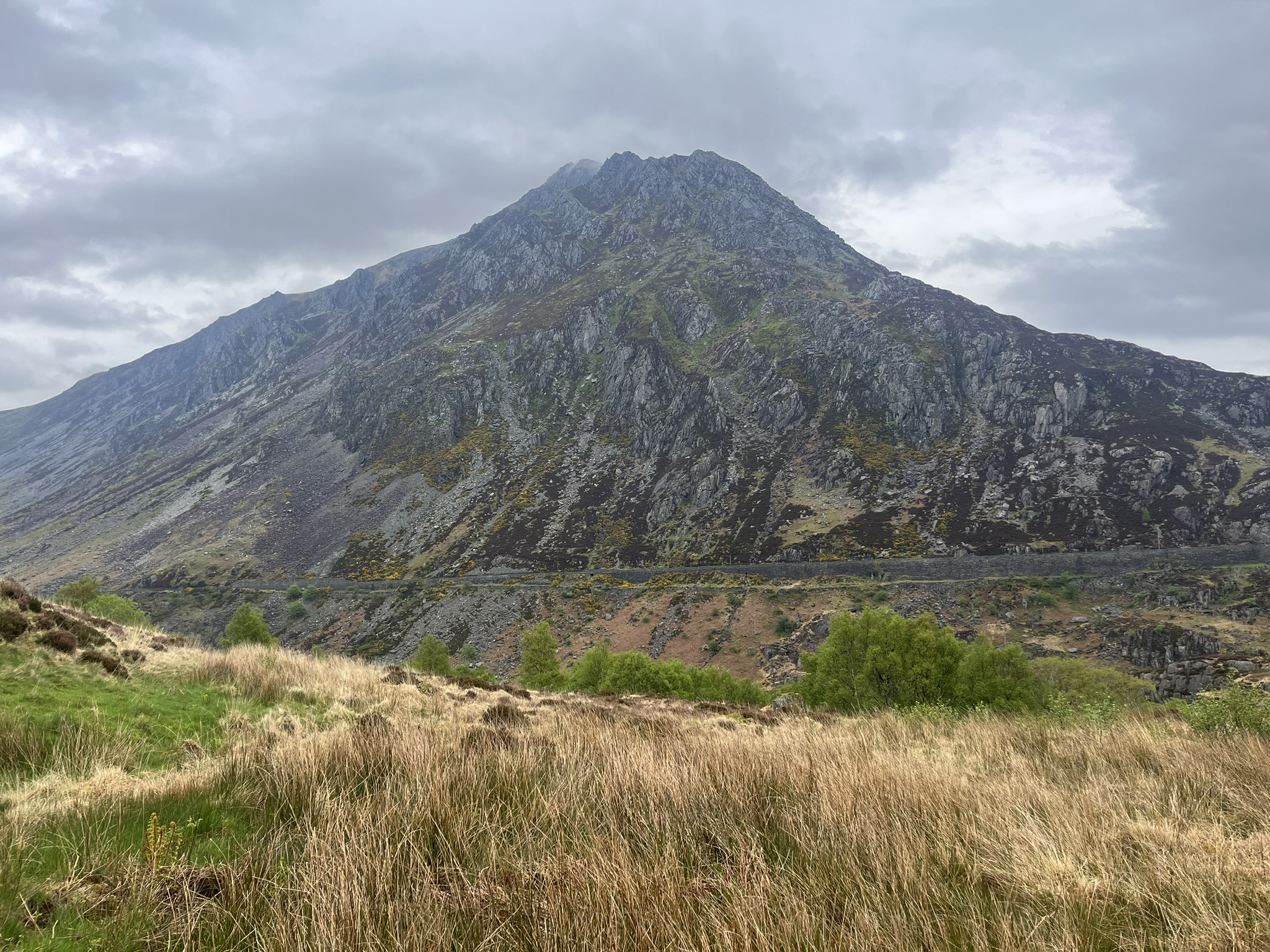
Already the mountains announce themselves. To our left is the long bulk of Gallt yr Ogof, its cave visible as we pass, and before long the much craggier verticals of Tryfan come into view. My father-in-law used to call it ‘The Beast’. Looking at its cruel and relentless slopes today, I find it hard to understand how I can ever have climbed it (admittedly, that was twenty years ago). It’s supposed to be the only mountain in Wales impossible to climb without using your hands.
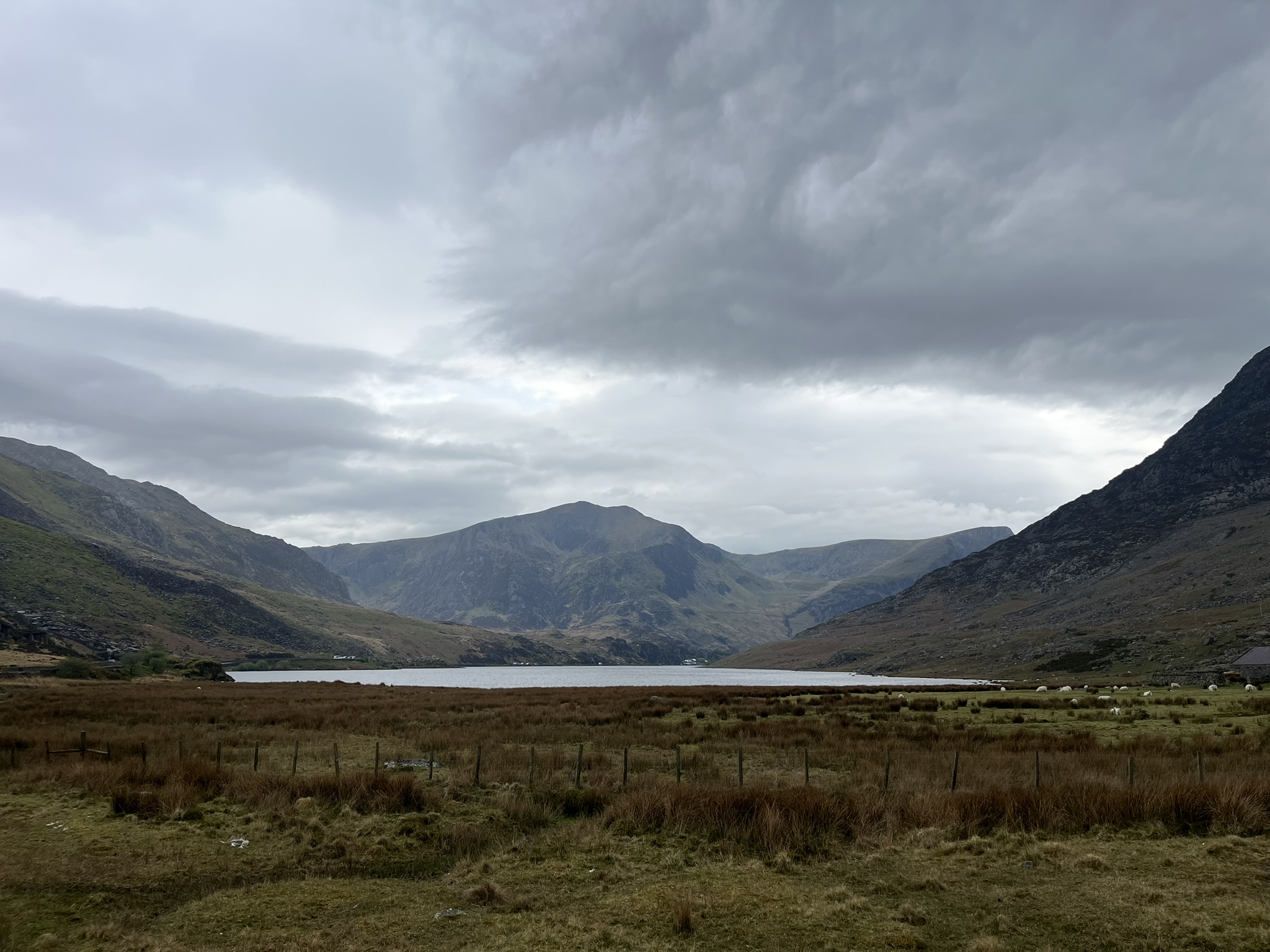
We scan the footpath up Tryfan, but can’t spot anyone. It starts to spit with rain (on-off rain plagues us for the rest of the day). Clouds grow darker and start to obscure the tops. Another mile or two of straight walking and Llyn Ogwen starts to appear. When we reach it, we swap sides with the A5 and climb up away from the lake on its north side. We’re following two other walkers, without checking the map. After a good deal of ascent we realise that the two walkers are actually on the Cambrian Way and not on our Trail at all. Yet another navigational error. We fumble our way back to the route.

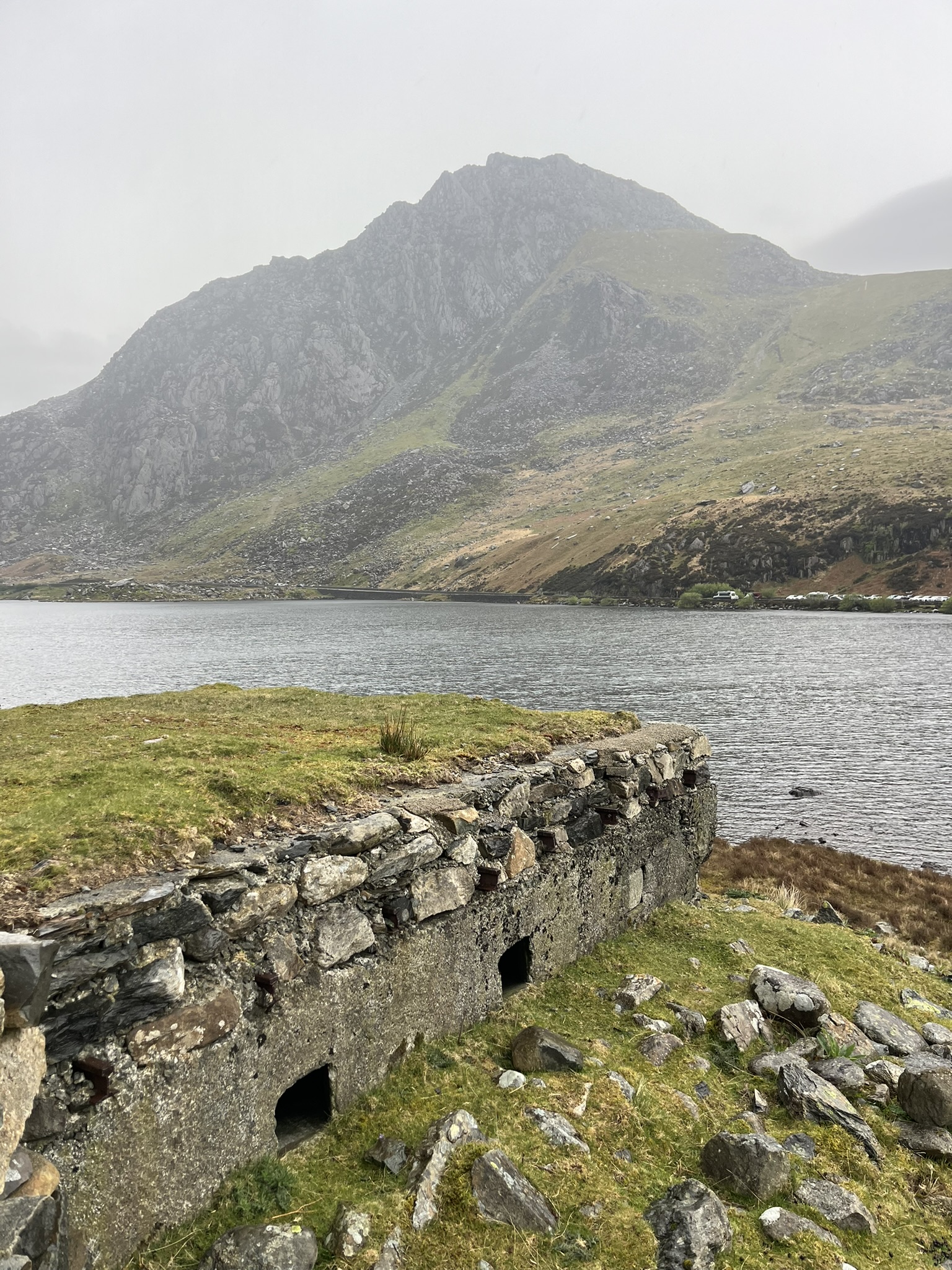
The Trail on this east, ‘wild’ side of Llyn Ogwen doesn’t have a settled path, just a series of occasional white posts to aim for. The guidebook gives no warning about this section, and we seriously underestimate its difficulty. It takes us over an hour to cover less than a mile as the crow flies, and involves a great deal of rock-hopping and bog-jumping. I’m quite comfortable with that kind of improvisation, but I can tell that C1 and C2 are a bit less happy. The end of this stretch, after a Second World War gun emplacement and just before the path joins the A5, is downright dangerous, at least for over-70s, with its chaotic pile of huge rocks (‘an up and down scramble’ is the guidebook’s euphemism).
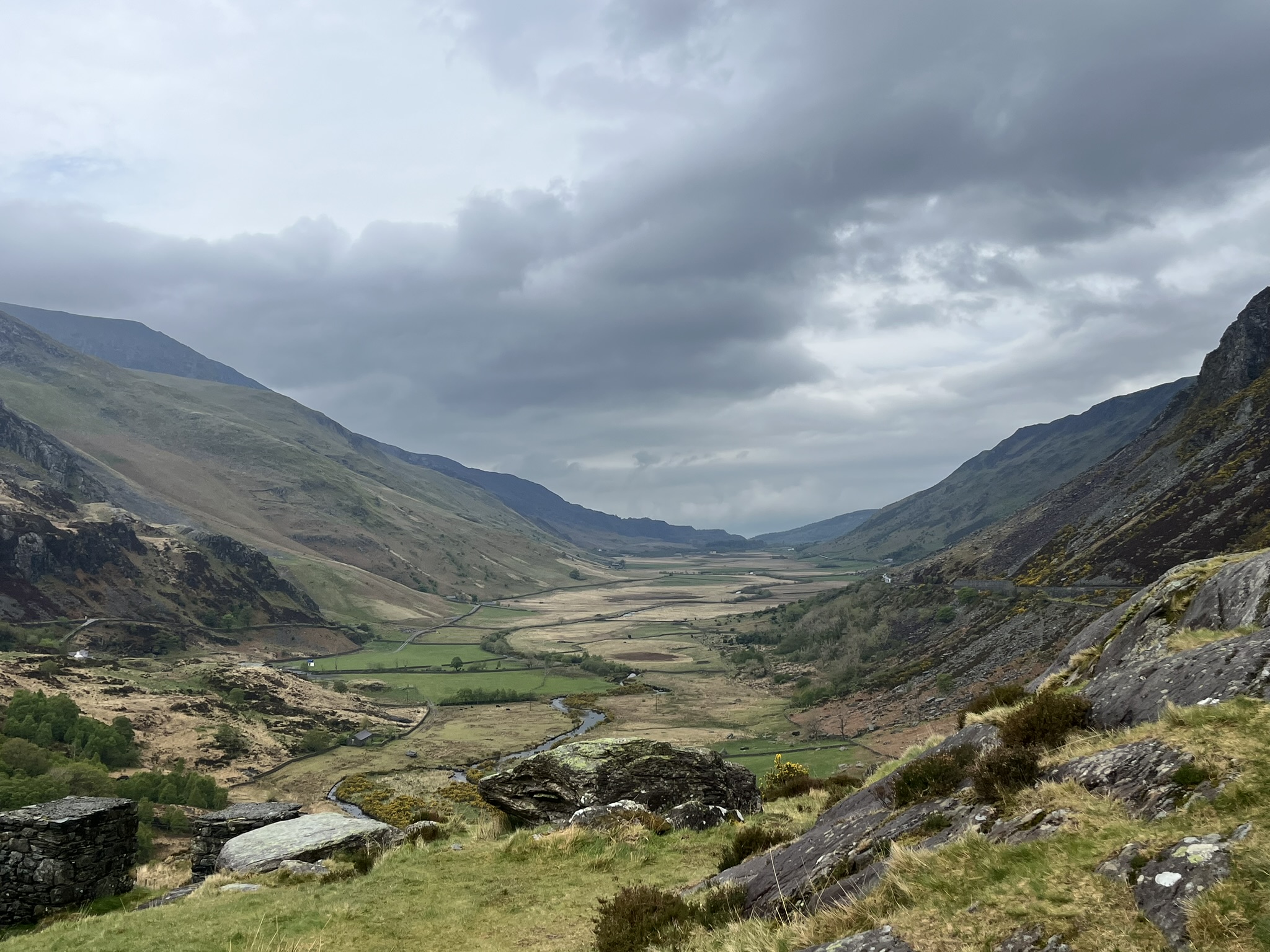
At last we reach tarmac, and walk up the main road to the Idwal Cottage, and the kiosk next door that serves us hot drinks and eccentric but acceptable flapjacks. By now we’re ready for a rest and a chance to warm our cold hands and steady our nerves. Then off we go again, on the easy track downhill along the Nant Ffrancon valley, a route apparently first built by Lord Penrhyn at the end of the eighteenth century. The views at the start call for snaps on our phone cameras: below us, a classic U-shaped glaciated valley pointing north, and, right opposite us, the bulk of Pen yr Ole Wen, frighteningly steep and, on its lower slopes, a festival of scree. Along with Tryfan this mountain features regularly in the TV disaster documentary series SOS: Extreme Rescues, after woe-begotten climbers have fallen, got lost or ventured on an impossible descent. We decide to give it a miss for today.
We also ignore the path to Cwm Idwal, ignoring the guidebook’s invitation – ‘a two-mile round trip’ – to visit its geological wonders, and stick to our undeviating lane. To our right is the flat valley floor, rough pasture covered with reeds and punctuated by a large rôche moutonnée, a sheep-shaped glacial erratic. Eventually the lane swerves right, but we keep going forward along a cycle track, Lôn Las Ogwen, its course marked by rather basic information panels about slate workers. In the distance is a hill that looks too linear to be natural, and sure enough it turns out to be the outer reaches of the Penrhyn quarry slate-tips.
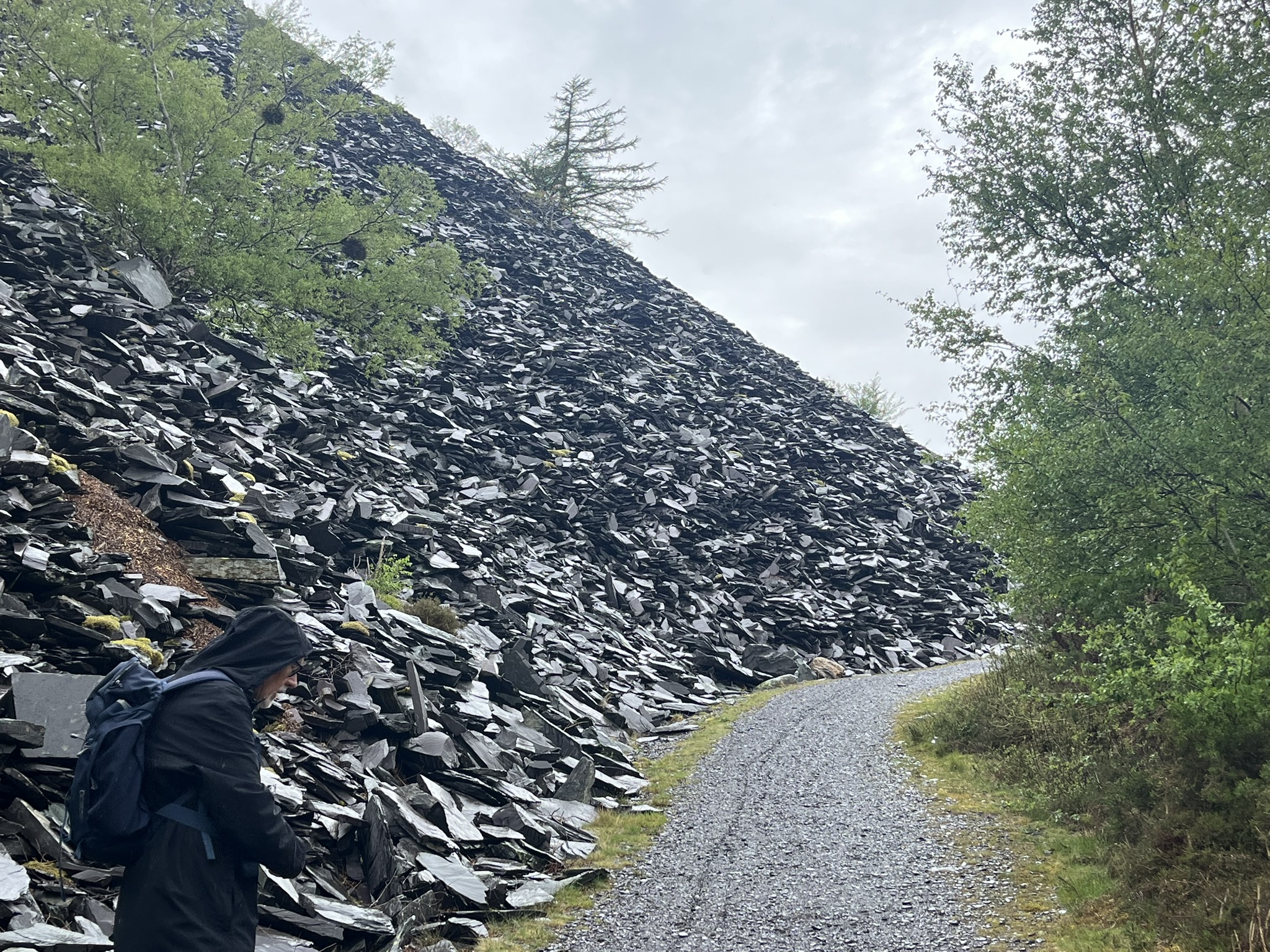
When we get there the track skirts the tips. The contrast is extreme: on our right, fresh green woodland and the rushing Afon Ogwen; to the left, steep mini-mountains of waste, glistening in the recent rain and piled high with slate shards of every size and shape. How they got to where they are is hard to fathom. Buildings or platforms crown some of the tips, giving them the look of an Aztec temple. We wonder whether nature, over centuries or millennia, will colonise and recapture this grey wilderness. Already thin birch trees have established themselves, high up on the tips, where earth and nutrients must be negligible.
This circuit of the waste goes on for a mile or more, so huge is the quarry. We pass the entrance to it, now occupied by Zip World. (Later, Martin, our taxi driver, later tells us that we’ve missed a thrilling experience, hurtling through the high air on a thin wire.) A little later we pass the derelict quarry hospital, which must have been a busy and probably brutal place in its time. Conservation is in progress to stabilise its structure. Finally, we say goodbye to the quarry works and follow a series of paths through quiet woodland and park to the centre of Bethesda. We’re early for the taxi and wander the main street, choked with busy A5 traffic.
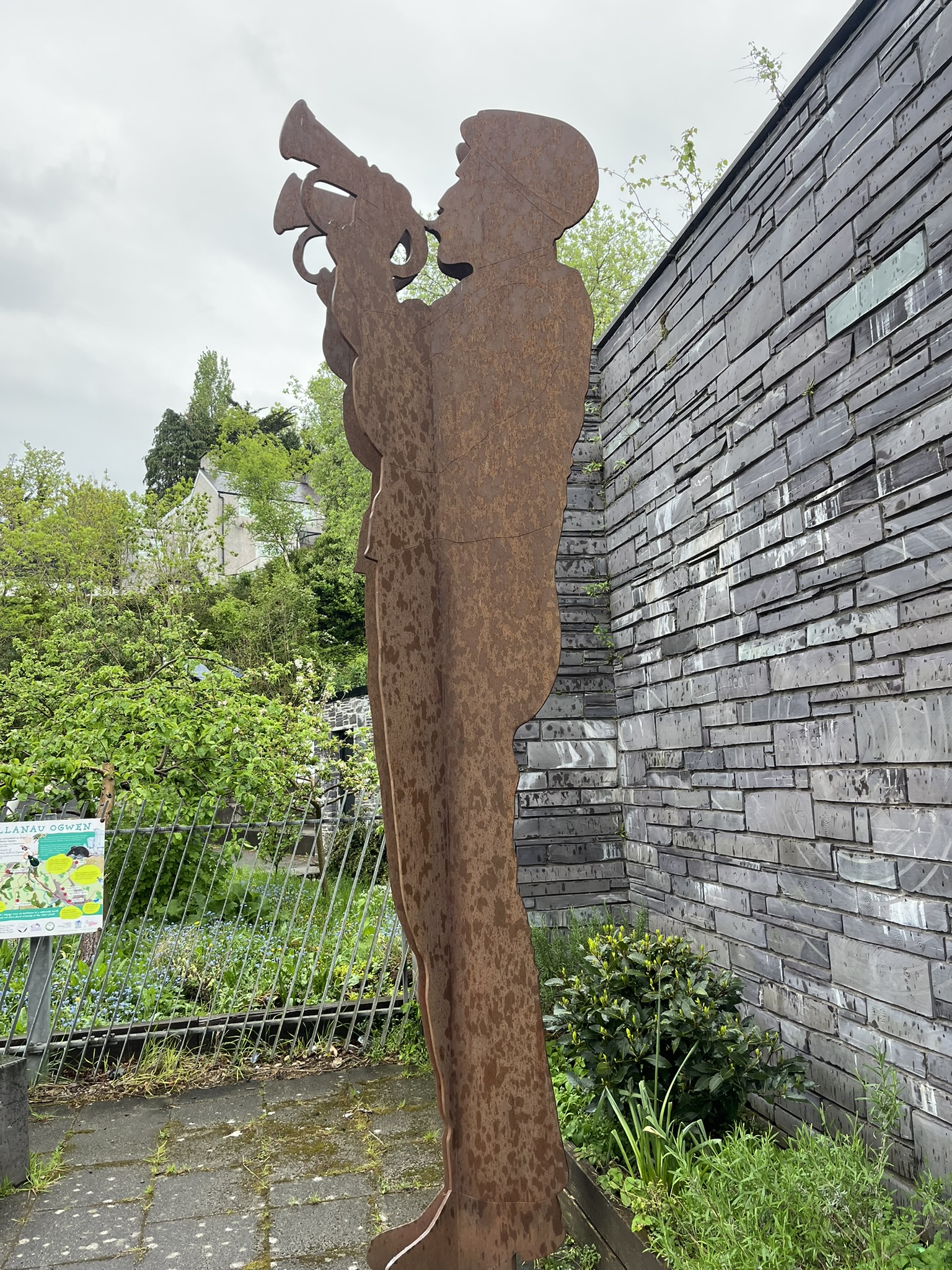
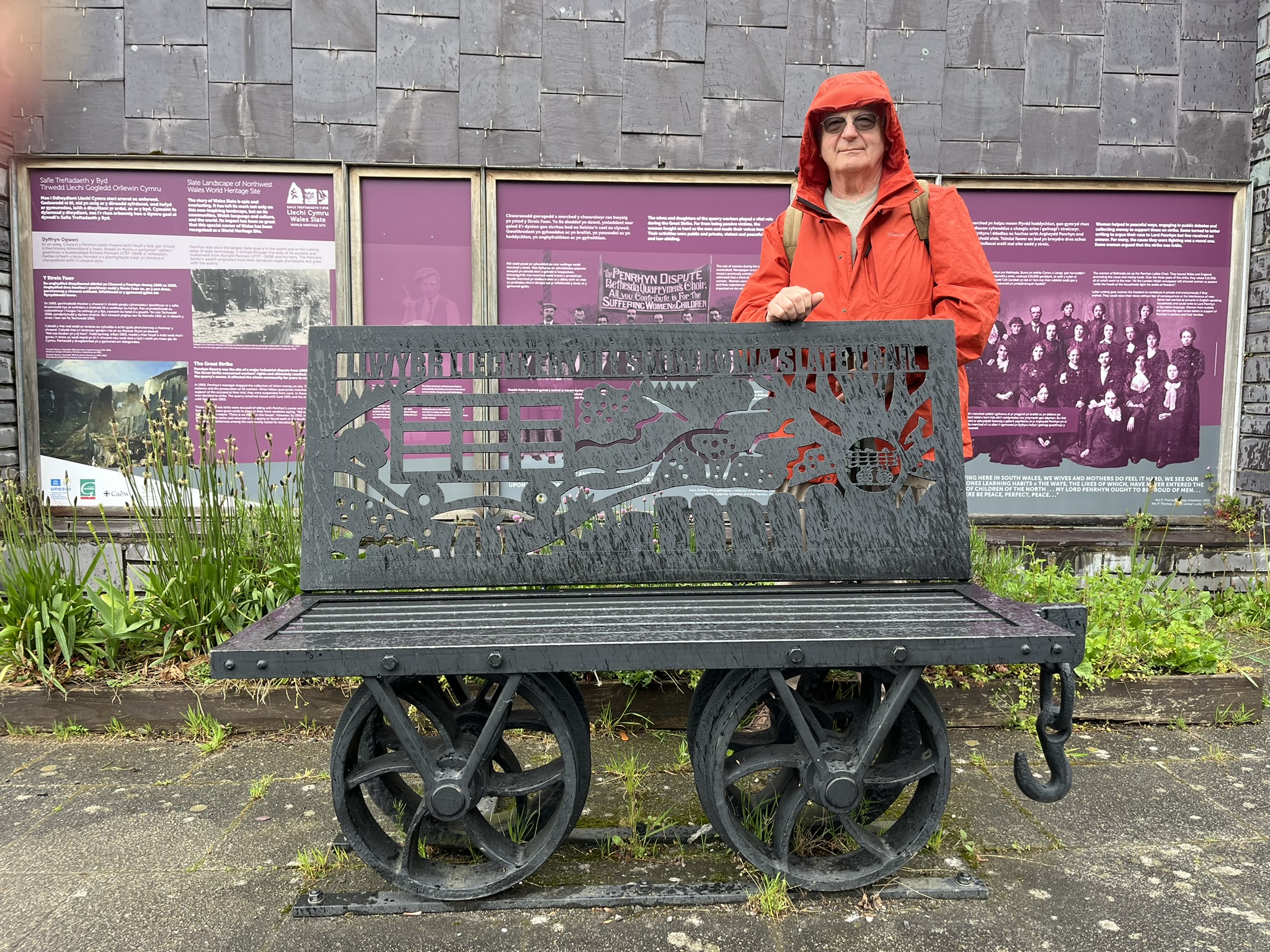
We began, at the start of Day 1, by skirting slate tips, and we finish with more tips. This strikes us as aptly symmetrical for a Slate Trail. Its precise terminus is a heritage display on Bethesda’s main street, with a giant metal quarry bugler, a Trail bench made out of a quarry trolley, a plaque, and panels about the Great Strike of 1900-03, still the longest industrial dispute in British history. The information highlights the important role women played in supporting the workers’ struggle. The quarrymen lost the battle, but it was a pyrrhic victory for Lord Penrhyn. The slate industry in Wales never recovered its dominance.
Our taxi arrives to take us to Bangor for our last night. Over dinner we look back over the Slate Trail – one of the most dramatic and enlightening walks we’ve done. And we look forward to future walks – no one’s in favour of calling it a day while we’re ahead. Maybe, for the first time, we’ll dare to go beyond the borders of Wales.


Leave a Reply