Category: history
-
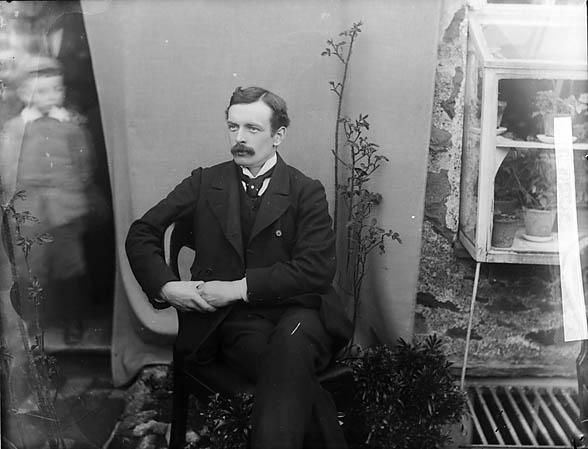
Lloyd George a’r bachgen yn y llun
Cricieth, 1890: David Lloyd George, cyfreithiwr a gwleidydd, 27 mlwydd oed, a John Thomas, ffotograffydd, 52 mlwydd oed. Lloyd George: Ydych chi’n siŵr am y lle hwn, Mr Thomas? John Thomas: Dewis perffaith, dywedwn i, Mr Lloyd George. LlG: David, plîs, Mr Thomas. Dim angen ichi fod yn ffurfiol. Dyn y werin bobl ydw i,…
-
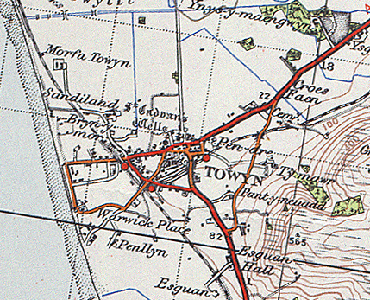
Ar enwau lleoedd
Y profiad a adawodd yr argraff fwya arna i yn ystod yr wythnos ddiwethaf oedd gwylio ffilm fer, fel rhan o raglen deledu Wales Live, oedd yn dangos y digrifwr Tudur Owen yn cerdded ar draws bae ar Ynys Môn – fel mae’n digwydd, bae yr ymwelais i ag e’n ddiweddar iawn. Nid y cerdded…
-
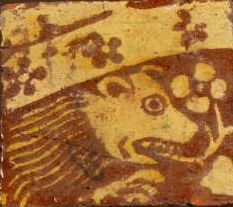
The Powysland Club: its origin and early development
1 Foundation The first county archaeological society in Wales was the Caerleon Antiquarian Association, founded in 1847 and renamed the Monmouthshire and Caerleon Antiquarian Association in 1857. It was twenty years before a second local archaeological society in Wales was founded, in 1867. The gap is puzzling, especially when one considers that this period…
-

‘Civilisations’ and museums
The big BBC series Civilisations has come to an end. It was designed as a remake of – and a challenge to – the famous Kenneth Clark series Civilisation, first shown in 1969. The challenge was directly reflected in the plural form of the new title. While Clarke was concerned almost exclusively with ‘Western civilisation’…
-

Frank Brangwyn’s British Empire Panels
1 Introduction Most Swansea people are familiar with the British Empire Panels. Many sitting through a dull patch in a concert in the Brangwyn Hall will have turned to ponder Frank Brangwyn’s enormous work. In a few months’ time the Panels will get more exposure, as Marc Rees’s performance piece Nawr yr arwr / Now…
-

Catherine Blake’s vision
Of all the astonishing visual images William Blake created, between the mid-1770s and his death in 1827, one of the most intriguing is a small sepia wash drawing (244 x 211mm) on a sheet of paper now in the Tate Gallery. It’s usually known by the title A vision: the inspiration of the poet. Since…
-

Swansea’s rebel women
For all their strengths in the campaign to gain votes for women Emmeline and Christabel Pankhurst were by nature autocratic. In 1907 some members of their Women’s Social and Political Union took exception to their announcement that the WSPU’s annual conference would be cancelled in future and that they themselves and their inner circle would…
-

Dr Thurley crosses the border
Last year Ken Skates AM, then the Cabinet member responsibility for culture, commissioned a museum director from London, Dr Simon Thurley, to make recommendations on the running of the National Museum of Wales. (Technically the Museum’s latest English title is Amgueddfa Cymru – National Museum Wales, a clumsy formulation which shows what trouble you get…
-

Boy in a window
An old, long-abandoned factory in Swansea’s Strand. It has two storeys, a stone wall at its base and a corrugated roof. Below, the windows are boarded or blacked out. Upstairs, where ragged glass hangs in the smashed panes, one window frame’s open. At its base a round-faced young boy, with dark hair and jug ears,…
-

William Jones, Glynneath, 100 years on
Almost exactly 100 years ago, at 6:25am on 25 October 1917, a terrible thing was done to a young man from Glynneath named William Jones. A group of soldiers from the Worcestershire Regiment formed a firing squad and shot him dead as a punishment for deserting his post on the Western Front. William, probably a…