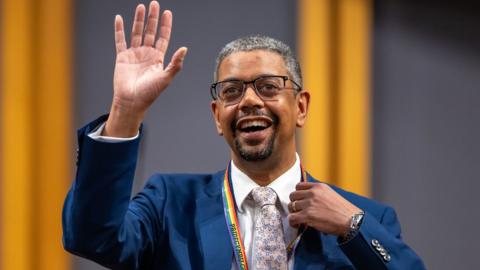
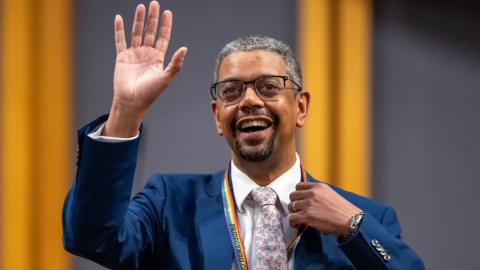
The facts are clear enough. Between December 2023 and January 2024 Vaughan Gething, a candidate for the post of First Minister in the Welsh Government, was given a donation of £200,000 towards his campaign. No one in his position had ever before received such a huge sum. The donor was a firm called Dauson Environmental Group (DEG), owned by David John Neal. In 2013 a court gave David John Neal a suspended sentence after his firm was prosecuted for dumping waste illegally on a Site of Special Scientific Interest in the Wentloog Levels. In 2017, after he failed to clear the waste, he received a second suspended sentence. In January 2024 a DEG subsidiary, Atlantic Recycling, pleaded guilty to a new offence. The same company was fined £30,000 for the death of a worker.
In 2016 Vaughan Gething, the local AM, lobbied Natural Resources Wales, the agency responsible for the environment, to ease restrictions on DEG. In February 2023, at a time when he was Economics Minister, the Development Bank of Wales (DBW), fully owned by the Welsh Government, gave a loan of £400,000 to a DEG subsidiary to buy a solar farm.
On 16 March 2024 Vaughan Gething the candidate became, by a narrow margin, Vaughan Gething the leadership victor. Four days later in the Senedd he was elected First Minister.
So much for the facts, thus far at least. What should we make of them? Nothing at all, says Vaughan Gething. Everything that happened was done within the law and within the rules of the Senedd, the Welsh Government and the Labour Party. All donations were properly registered. The Code of Conduct for Senedd members and the Ministerial Code had not been broken. The DBW makes its investment decisions entirely independently of government ministers. None of the DBW money was recycled into the donation to Gething. There is no case for returning the donation to its source.

The Labour Party seems to agree. Aside from some grumblings from backbenchers, and the statement of Jeremy Miles, the defeated candidate, that he personally would not have accepted such a donation, the Party seems unable to question Gething’s conduct. Instead of agreeing to hold an independent inquiry, Gething asked a previous First Minister, Carwyn Jones, to conduct a ‘review’ of political donations. He and his supporters are clearly confident that the clamour outside the Party about the donation will fade into silence.
What about the rest of us? Should we be concerned? We should. For three reasons, I suggest.
First, isn’t there something badly wrong with ‘the rules’ as they stand? Can it be right for such a huge ‘donation’ to be made to a single individual’s campaign for a political position in Wales? If a sum of such size can affect the result – clearly that was the intention – when another candidate doesn’t have access to similar funds, where does that leave our democracy? Is it really reduced to ‘the best democracy money can buy’? And can it be right for a candidate for first Minister to be allowed to receive such a large sum from a convicted criminal?
Second, whatever the status of ‘the rules’, and irrespective of whether the ‘letter of the law’ was broken or not, the affair raises so many suspicions that it can’t be allowed to go uninvestigated by an external authority. It would be fatal for us to accept potential wrongdoing as ‘just the way things are these days.’ It would mean that we expect our Welsh politicians to behave no differently from so many Tory politicians in Westminster, addicted as they are to corruption, favouritism and dishonesty. It would mean that the Labour Party in Wales would be sliding back to the bad old days of Glamorgan County Council in the 1960s, when cronyism and corruption were endemic and everyone turned a blind eye except for marginal magazines like Rebecca.
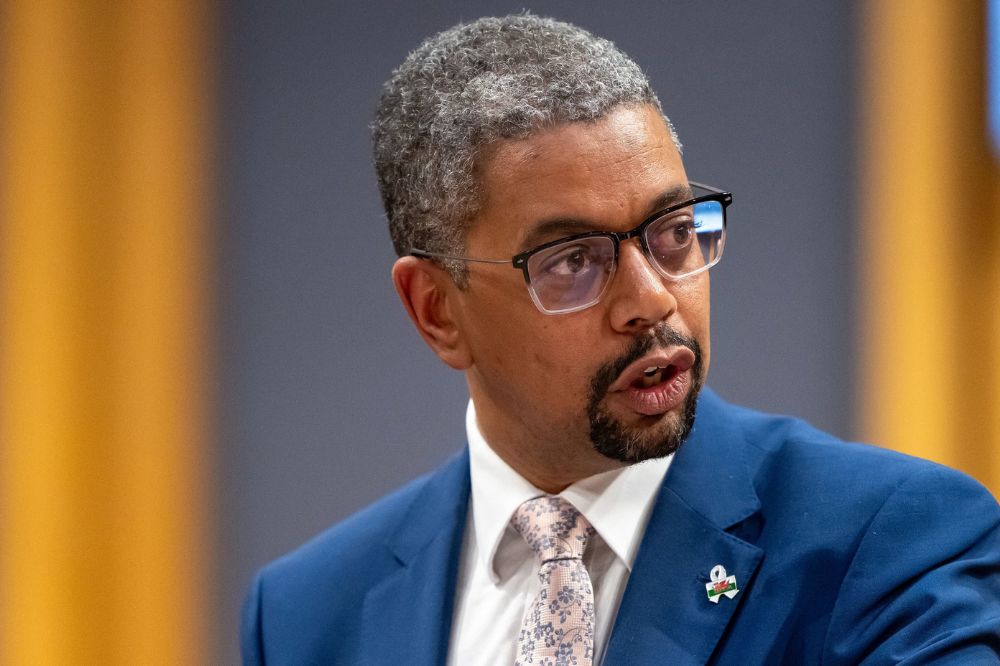
Third, the Gething affair is a serious setback for those who favour an independent Wales for non-nationalist reasons. Independence, according to this argument, is essential for Wales to break away from a dominant Tory political culture that has denied and smothered its natural radicalism and communtarianism for a century and more. A more just society, a less extractive economy and a greener environment can never be achieved when all the critical decisions affecting each remain in the hands of reactionary hands in Westminster, and while devolution seems to deliver only marginal benefits. This case for self-determination, though, is undermined if the best leading Welsh politicians can do is ape the worst ethical standards of MPs and ministers in the House of Commons. What would be the point of gaining more power if the public lacked the confidence that it could be directed honestly and wisely?
The argument for independence is also weakened if the Welsh government can’t find better policies than the Tories in London. There are already reasons to be wary of the political direction of the Gething government. In the few weeks since his election, it’s announced that the 20mph policy is to be diluted or scrapped, reversing a rare radical and pioneering Welsh government policy, and signalling a Sunak-like reluctance to take the environment seriously. In his recent statement on the financial crisis facing the National Museum, Gething gave the strong impression that he would be unconcerned if the Museum’s main building in Cardiff were to close. He knew, he claimed, what ‘the people’ wanted, and it was not culture and the arts. Rishi Sunak couldn’t have put it better.
I suppose we’ve been lucky to have been spared such reactionary, arrogant populism in the behaviour of Gething’s predecessors as First Minister.


![Lyn [Mr] Jenkins avatar](https://secure.gravatar.com/avatar/803a0947f88ab80034ebc718e5c45362ae2f83e191a5f39f8e00a1101cabfe55?s=40&d=mm&r=g)


Leave a Reply